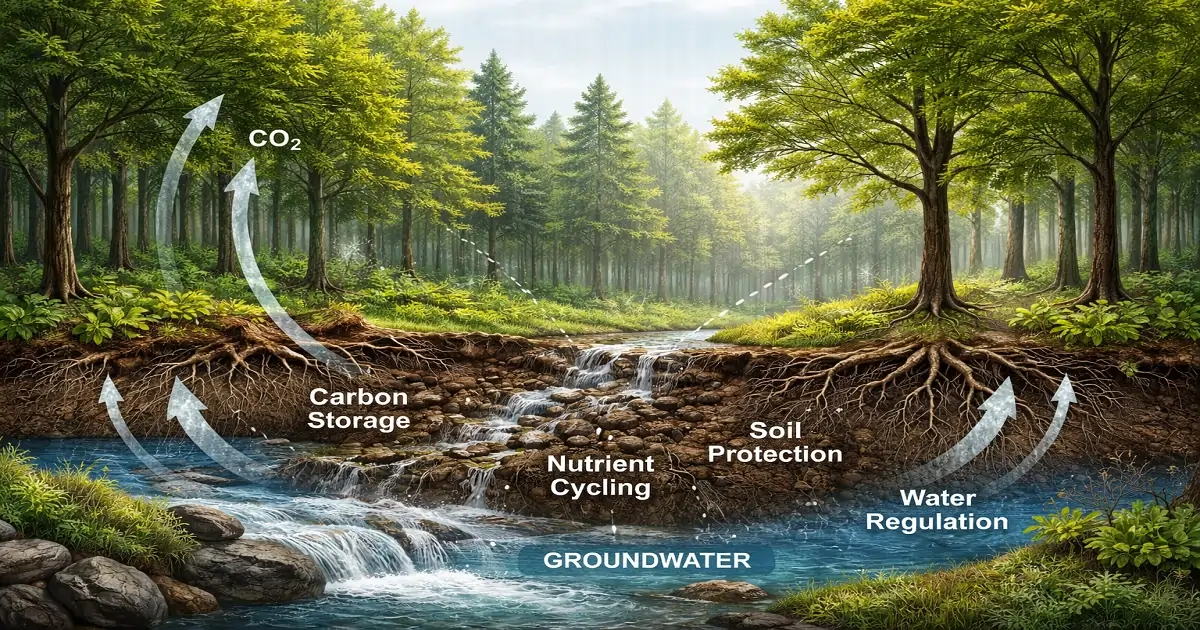
Forests are often seen as quiet green spaces. However, their real value goes far beyond scenery or wildlife alone. Forests function as living systems that deliver essential services every day. These forest ecosystem services help natural systems work smoothly, often without notice.
Today, these services matter more than ever. Climate stress is increasing. Land is degrading faster in many regions. Water cycles are becoming less predictable. In this context, forests play a stabilizing role by supporting environmental balance across landscapes.
Besides this, forests connect soil, water, air, and living organisms through continuous natural processes. These connections reduce pressure on fragile environments. They also help societies adapt to change.
Understanding how forests support soil, water, and climate balance helps explain why their protection matters for long-term environmental stability.
What Are Ecosystem Services of Forests?
Ecosystem services are the helpful benefits that nature provides through everyday processes. These benefits support people, wildlife, and the environment. They include clean air, fertile soil, stable climates, and fresh water. Most of these services work quietly in the background. However, daily life depends on them more than many realize.
Forests play a major role in delivering these services. Through natural growth and interaction, forests regulate air quality, manage water flow, and protect land. Trees, soil organisms, and vegetation work together to keep natural systems stable. As a result, forests offer benefits that reach far beyond their physical boundaries, often described as forest ecosystem services.
Environmental institutions recognize these services as essential links between natural systems and human well-being, reflecting widely accepted explanations of how forests support ecological balance across landscapes.
These forest-related ecosystem services are commonly grouped into broad categories based on how they support environmental balance and human well-being. This grouping helps explain their role without changing how they function. Later sections explore these service groups in detail and show how they operate together.
Ecosystem Services Explained in the Context of Forests
In forests, ecosystem services emerge from simple yet powerful natural processes. Tree roots stabilize soil. Leaves slow rainfall. Organic matter enriches the ground. Together, these actions reduce stress on land and water systems. Over time, they improve environmental resilience.
Besides this, forests help regulate temperature and moisture. Canopies provide shade and release water vapor into the air. This process supports local climate balance. Forest soils also store nutrients and carbon, which strengthens long-term stability.
Through these processes, forests deliver a wide range of services provided by forests that support environmental stability and long-term ecosystem functioning.
Because of these benefits, the importance of forests in the ecosystem becomes clear. They do not act alone. Instead, forests connect air, water, soil, and living organisms into a working whole. These connections allow natural systems to function smoothly and recover from pressure more effectively.
Regulating Services of Forests
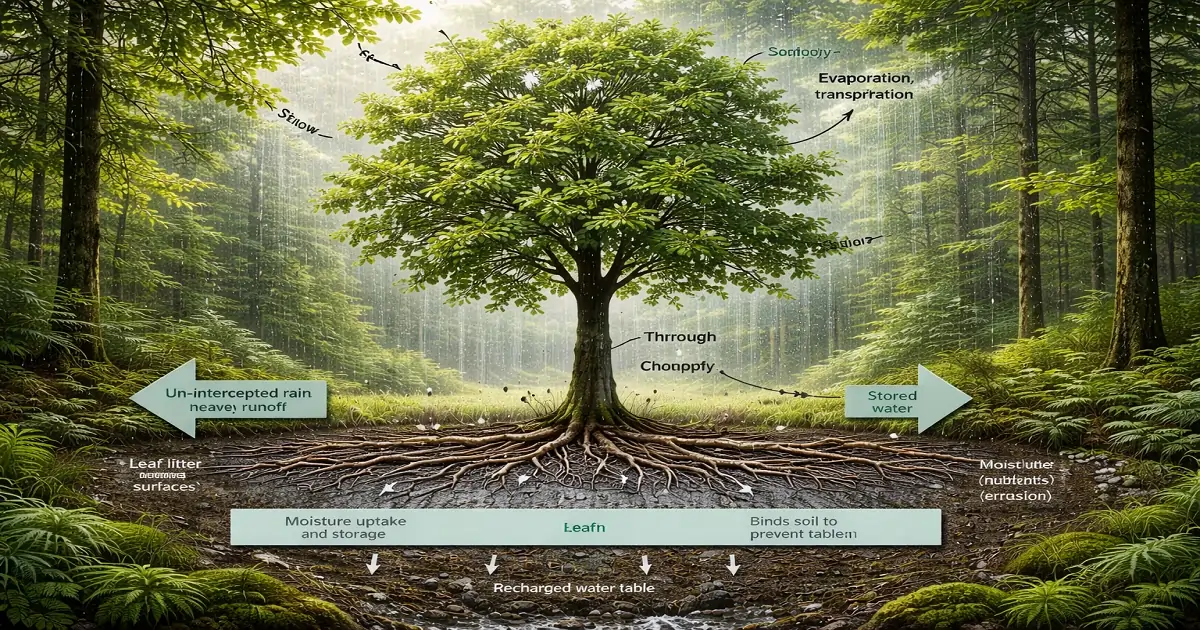
Regulating services of forests help keep environmental conditions stable and predictable. These services control natural processes that affect climate, soil, and water. Although they often go unnoticed, they reduce many environmental risks.
Because of this, forests play a quiet but critical role in maintaining environmental balance across landscapes.
Through continuous interaction with air, land, and water, forests reduce extremes. They slow harmful changes and support steady natural cycles. These regulating functions become especially important during climate stress and land degradation.
Climate Regulation and Carbon Storage
Forests help regulate climate by absorbing carbon dioxide from the air. Trees use this carbon during growth and store it in trunks, branches, roots, and soil. As a result, forests reduce the amount of heat-trapping gases in the atmosphere.
Besides this, forests help moderate temperature. Tree canopies provide shade during hot periods. Moisture released from leaves cools surrounding air. Therefore, areas near forests often experience more stable local climates.
Forests also influence rainfall patterns. Through evaporation and transpiration, they support cloud formation and moisture movement. This process helps maintain seasonal balance. Over time, these climate-regulating functions support agriculture, water availability, and ecosystem stability.
These processes connect closely with broader climate systems. While this section focuses on core functions, a dedicated discussion on forests and climate regulation can explain these mechanisms in greater depth.
Soil Protection and Erosion Control
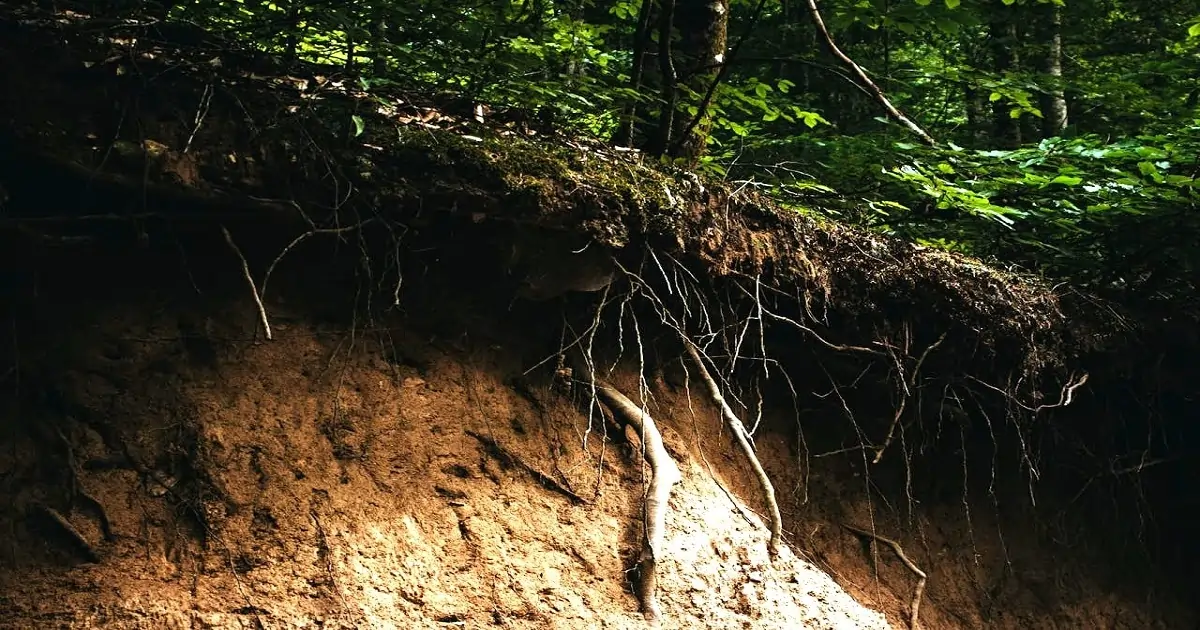
Forests protect soil through several natural mechanisms. Tree roots bind soil particles together and strengthen the ground. This root network prevents soil from being easily washed or blown away. As a result, forested land remains more stable over time.
Leaf litter and organic matter cover the forest floor. This layer softens rainfall impact and slows surface runoff. Water enters the soil gradually instead of flowing across it. Scientific research on soil-protecting forests shows that natural forest cover plays a key role in reducing erosion and maintaining land stability.
Healthy forest soils also absorb water efficiently. Better infiltration limits flooding and reduces sediment loss. Together, roots, litter, and soil organisms form a protective system. This process explains how forests protect soil from erosion and why land degrades faster when forest cover disappears.
Water Regulation and Runoff Control
Forests regulate water movement across landscapes. When rain falls on forested land, leaves and branches slow its descent. This reduces the force of water reaching the ground. As a result, soil absorbs more water.
Forest soils contain organic matter and root channels. These features allow water to move downward gradually. Reduced surface runoff lowers flood risk and protects nearby rivers from sediment buildup. Therefore, forests help keep water systems cleaner and more stable.
Besides this, forests support groundwater recharge. Water that enters the soil replenishes underground reserves. These reserves supply streams and wells during dry periods. Through these regulating services, forests maintain steady water flow and reduce extremes.
This balance supports ecosystems, farming, and human settlements without relying on complex infrastructure.
Supporting Services That Maintain Ecosystem Stability
Supporting services work quietly beneath the surface. They do not always provide direct products. However, they make all other forest services possible. These services help ecosystems stay productive and resilient over time.
Forests support natural processes that renew soil, recycle nutrients, and sustain living systems. Without these background functions, forests could not regulate climate or supply resources. Therefore, supporting services form the foundation of ecosystem stability.
Nutrient Cycling and Soil Formation
Forests support nutrient cycling through constant organic renewal. Leaves, branches, and fallen trees break down over time. This decomposition returns nutrients to the soil in usable forms. As a result, soil remains fertile and productive.
Microorganisms play a key role in this process. Bacteria and fungi break down organic matter into simpler compounds. These microbes release nutrients that plants can absorb. Besides this, they improve soil structure by creating small air spaces.
Over long periods, these processes help form healthy soil layers. Rich forest soil holds water better and resists erosion. It also supports strong root growth. Because of this, forests maintain long-term soil fertility and ecosystem stability.
Habitat Support and Biodiversity Foundations
Forests provide stable habitats for many forms of life. Tree layers create shelter, shade, and suitable conditions for growth. Soil organisms, plants, and animals all depend on these environments to survive.
Habitat support strengthens ecosystem balance. When organisms have stable living space, food chains function smoothly. This balance allows forests to recover from stress such as storms or droughts. Therefore, forests remain resilient over time.
Through these habitat functions, forests show why they are important to the ecosystem. They support interactions between living and non-living elements. These interactions keep ecosystems functioning as connected systems rather than isolated parts.
Provisioning Services Provided by Forests
Provisioning services refer to materials that forests supply directly. These services meet basic human needs while remaining part of natural systems. However, they depend on healthy forests to continue over time.
Forests provide renewable resources through natural growth cycles. When used responsibly, these resources support daily life without damaging ecosystem balance. Therefore, provisioning services link nature and society in practical ways.
Food, Materials, and Medicinal Resources
Forests supply a wide range of food resources. Fruits, nuts, seeds, honey, and edible plants support diets in many regions. These foods often supplement local nutrition and seasonal needs.
Forests also provide materials such as timber, bamboo, and fibers. These forest resources are used for construction, tools, and household items. When harvesting follows natural limits, forests can regenerate these materials.
Medicinal resources are another important contribution. Many traditional remedies and modern medicines originate from forest plants. These provisioning services of forests support health systems while relying on biodiversity and ecological balance.
Cultural and Social Services of Forests
Cultural and social services reflect how people connect with forests beyond physical resources. These services influence identity, learning, and well-being. Although less visible, they strongly affect human experience.
Forests shape traditions, knowledge, and daily practices across communities. Through these connections, forests contribute to social stability and environmental awareness.
Cultural Value, Education, and Recreation
Forests hold cultural meaning in many societies. Sacred groves, traditional practices, and shared stories reflect long-standing relationships with forest landscapes. These connections strengthen cultural identity and respect for nature.
Forests also serve as learning environments. Students, researchers, and communities study forests to understand natural processes. Observation and experience build awareness of ecological balance.
Besides this, forests offer spaces for relaxation and reflection. Walking, observing nature, and quiet recreation support mental well-being. These experiences deepen appreciation for forests without focusing on tourism or commercial use.
Why Ecosystem Services of Forests Matter Today
Ecosystem services matter more as environmental challenges grow. Climate change is increasing temperature extremes and weather uncertainty. Forest services help moderate these effects through natural regulation.
Land degradation is another growing concern. Healthy forests protect soil, recycle nutrients, and support recovery. Without these services, land loses productivity faster.
Water stress also affects many regions. Forests regulate water flow and support groundwater recharge. Together, these functions show the role of forests in environmental balance.
Because of these benefits, forests remain essential to the ecosystem. Their services support adaptation, resilience, and long-term stability in a changing world.
How Ecosystem Services Connect Back to Forest Conservation
Ecosystem services depend on healthy forest systems. When forests remain intact, natural processes continue without disruption. Soil stays fertile. Water cycles remain balanced. Climate regulation functions steadily. These services support both nature and human needs over time.
However, when forests degrade, these services weaken. Tree loss reduces soil stability. Water runoff increases. Local climates become less predictable. As a result, ecosystems struggle to recover from stress. Small changes in forest health can create wider environmental effects.
Understanding these ecosystem services highlights why forests and their importance extend beyond individual benefits to long-term environmental stability. Forest conservation supports the systems that provide clean water, stable land, and balanced climates. It protects the processes that operate quietly every day.
This connection shows why conservation matters even when benefits are not immediately visible. Protecting forests helps maintain the services that reduce environmental risk. In the long run, conservation supports resilience across landscapes and communities.
Conclusion
Forests provide more than visible resources. They deliver ecosystem services that regulate climate, protect soil, and support water systems. These services work together to maintain environmental balance.
Supporting, regulating, provisioning, and cultural services depend on healthy forest processes. When forests remain stable, natural systems function smoothly. When forests decline, these systems weaken.
Recognizing these connections helps explain why forests matter today. Their services reduce pressure from climate stress, land degradation, and water shortages. By understanding how forests support natural balance, we can better appreciate their role in long-term environmental stability.