The Amazon Rainforest is the largest rainforest on Earth and one of its most powerful natural systems. Covering about 2.6 million square miles, it spreads across much of South America and shapes environmental processes at a global scale.
The Amazon Rainforest size influences rainfall, stores carbon, and sustains rich biodiversity. These functions make it essential for maintaining climate balance.
Stretching across several countries, the forest connects rivers, soils, and the atmosphere into one living network. This connection allows natural cycles to operate continuously.
Besides its size, the Amazon is known for remarkable biological richness. Millions of species live within its layered structure.
Furthermore, changes in this forest affect regions far beyond its borders. Understanding its scale and importance helps explain why protecting the Amazon matters to everyone.
What Is the Amazon Rainforest?
The Amazon Rainforest is a vast tropical forest system located near the equator. It forms the largest continuous rainforest on the planet.
This forest is not just a group of trees. It is a complex system where land, water, air, and life interact constantly.
Rivers flow through dense vegetation and shape the surrounding land. Wetlands and floodplains expand and shrink with seasonal rains.
Together, these elements support millions of species and regulate natural cycles.
Scientists study this rainforest to understand biodiversity, climate balance, and ecosystem resilience.
Because of its size, natural processes here operate at a scale unmatched anywhere else on Earth.
While the Amazon represents the largest example of a tropical rainforest, similar forest systems exist in other regions. A Guide to the Tropical Rainforest of India explains how tropical rainforests function in the Indian subcontinent, highlighting their structure, biodiversity, and ecological significance.
Geographic Location and Countries Covered
The Amazon Rainforest lies in northern South America and spreads across several countries. Brazil contains the largest share of the forest.
Other countries include Peru, Colombia, Venezuela, Ecuador, Bolivia, Guyana, Suriname, and French Guiana.
This wide geographic spread increases ecological diversity. Mountains, lowlands, and river basins create different habitats.
Large rivers connect these regions into one continuous system. As a result, environmental changes in one country can affect the forest as a whole. This makes regional cooperation essential for conservation.
Why It Is Called the World’s Largest Rainforest
The Amazon forest is called the world’s largest rainforest because of its enormous continuous forest cover. No other rainforest matches its size. Its uninterrupted landscape allows ecosystems to function naturally.
Large forests stabilize temperature and recycle moisture efficiently. Smaller forests cannot influence climate at the same scale. This vast size explains why the Amazon plays such a central role in Earth’s environmental systems.
How Large Is the Amazon Rainforest?
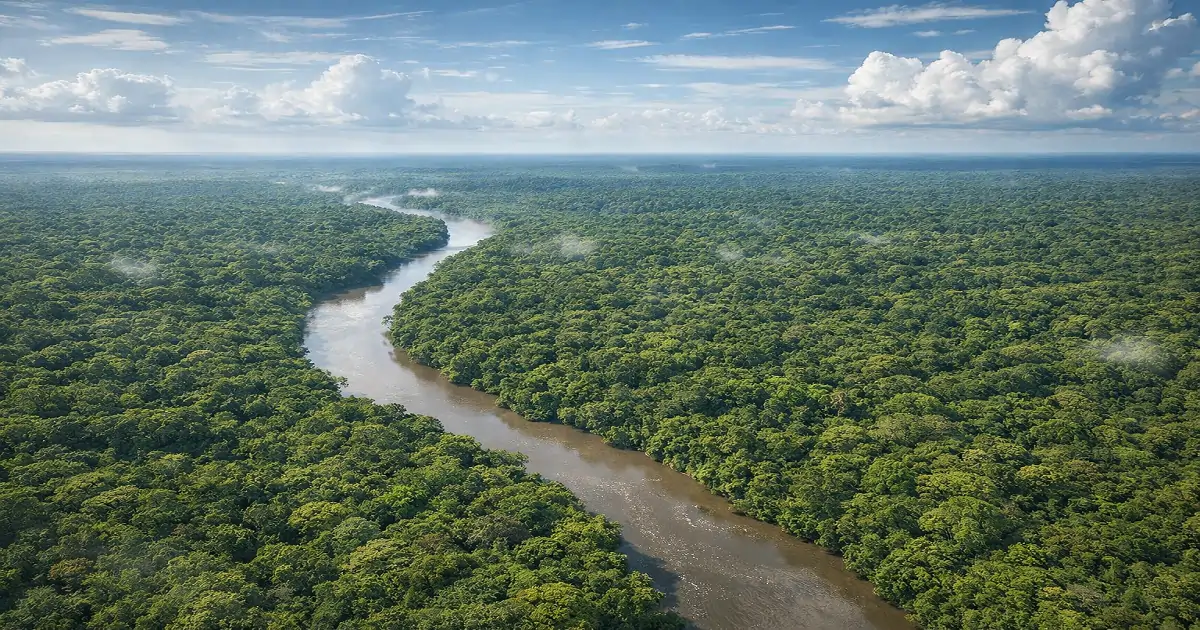
The Amazon Rainforest covers about 6.7 million square kilometers. This equals roughly 2.6 million square miles.
It occupies nearly forty percent of South America’s total land area. This immense scale allows the forest to influence climate far beyond its boundaries. Water released from trees rises into the atmosphere and travels long distances.
The forest’s size also supports enormous biodiversity. Large habitats reduce overcrowding and competition. This allows many species to coexist and adapt. Moreover, the Amazon functions as one continuous system. This continuity strengthens resilience and stability.
Amazon Rainforest Size in Numbers
The Amazon contains billions of trees representing thousands of plant species. Its river system forms the largest drainage basin in the world. The forest releases vast amounts of water vapor daily.
This process supports rainfall cycles across South America. These numbers show how physical scale supports ecological function. Large systems can store energy and nutrients more efficiently.
Comparison With Other Major Forests
The Congo Rainforest is the second largest tropical rainforest. However, it covers less than half the Amazon’s area. Boreal forests stretch across northern regions but exist in colder climates.
Unlike these forests, the Amazon combines size with extreme biodiversity. This unique combination gives it unmatched global influence.
Why the Amazon Rainforest’s Size Matters Globally
The Amazon’s vast size allows it to regulate climate on a planetary scale. Trees absorb carbon dioxide and store it in biomass. This helps slow the buildup of greenhouse gases.
Large forest areas also influence rainfall systems. Moisture released by leaves forms clouds that travel across continents. These rain systems support agriculture, rivers, and freshwater supplies.
Without the Amazon, many regions would become drier and less stable. The immense size of the Amazon Rainforest allows it to regulate climate, store carbon, and support unmatched biodiversity.
These functions reflect the broader role that forests play in sustaining life on Earth. To understand how different forest types contribute to climate balance, ecosystems, and human survival, explore our detailed guide on forests: types, importance, and their role in sustaining life.
Because its impact reaches far beyond South America, protecting the Amazon protects global environmental stability.
Biodiversity of the Amazon Rainforest
The Amazon Rainforest hosts one of the richest collections of life on Earth. Millions of species live within its boundaries. Many of them remain unknown to science. High biodiversity increases ecosystem stability.
Different species support one another through complex relationships. Plants, animals, fungi, and microorganisms form interconnected food webs. This diversity also provides resources for medicine, research, and cultural knowledge.
Plant Diversity and Forest Layers
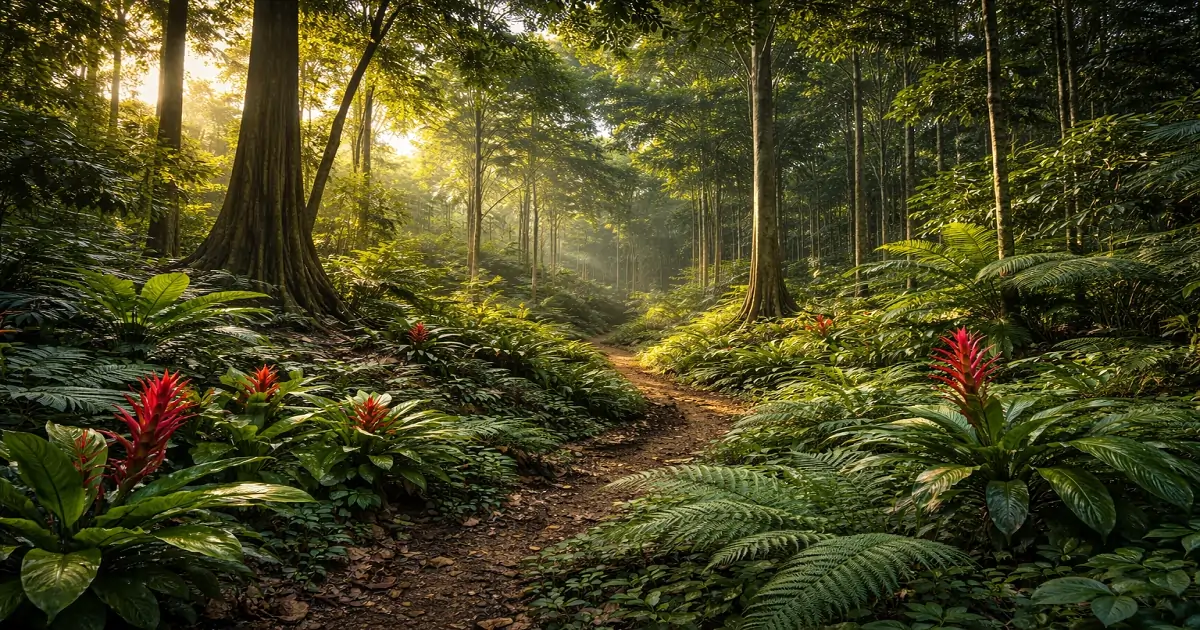
The Amazon Rainforest contains several forest layers, including the canopy, understory, and forest floor. Each layer supports different plant life.
Tall canopy trees such as the kapok and Brazil nut trees capture most sunlight. Below them, smaller trees like cacao and rubber trees thrive in filtered light. The forest floor supports ferns, mosses, and fungi that recycle nutrients.
Medicinal plants such as cinchona and cat’s claw grow naturally in the forest. These plants highlight the Amazon’s importance for global health research.
Animal Diversity and Endemic Species
The Amazon supports a wide range of animals, from tiny insects to large mammals. Mammals include jaguars, sloths, tapirs, and several monkey species. Birds such as macaws, toucans, and harpy eagles fill the forest canopy.
Reptiles include anacondas, caimans, and tree frogs. Many species are endemic, meaning they exist nowhere else. Each animal plays a specific role in maintaining ecological balance.
Explore More: Cedar Tree: Its Characteristics, Habitat, & Importance
Unique Ecosystems Within the Amazon Rainforest
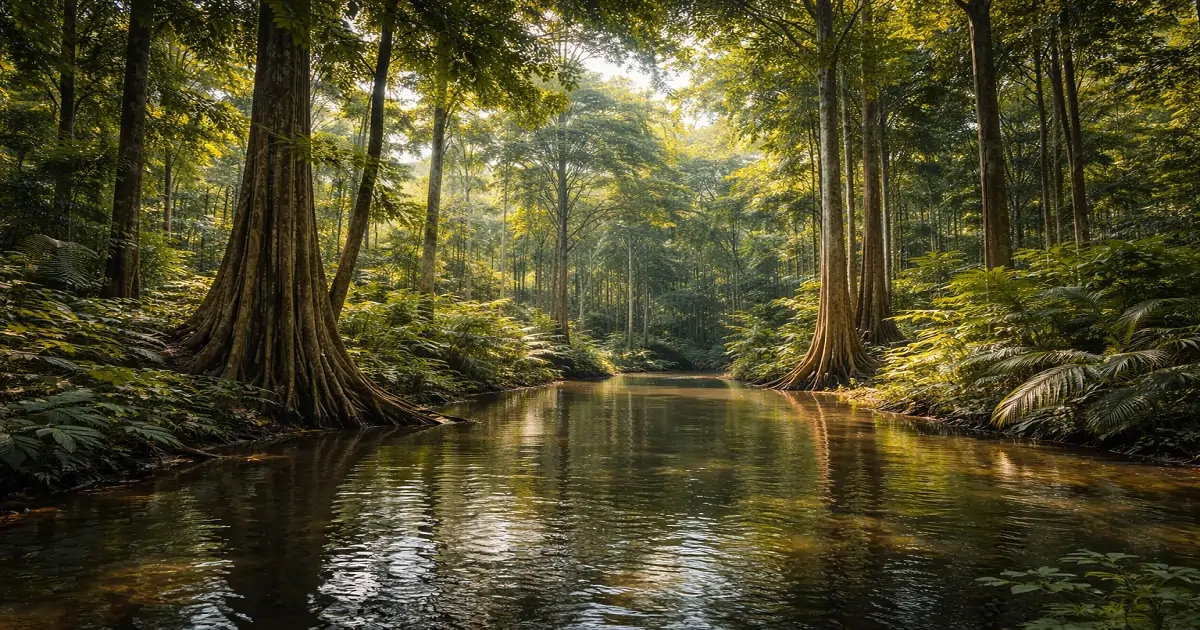
The Amazon is not a single ecosystem. It contains many interconnected ecosystems. Each responds differently to soil, water, and seasonal change. This diversity increases resilience across the forest.
If one area is disturbed, others can continue functioning. Together, these ecosystems form a strong and adaptive natural system.
Terra Firme Forests
Terra firme forests remain dry throughout the year. They cover the largest portion of the Amazon. These forests support tall trees and large mammals. They also store significant amounts of carbon.
Flooded Forests Várzea and Igapó
Flooded forests experience seasonal river flooding. Plants and animals here are adapted to rising water. Fish use these areas for breeding. Seasonal floods enrich soils and support food production.
Human Impact on the Amazon Rainforest
Human activity has changed large areas of the Amazon Rainforest. Agriculture, mining, infrastructure, and logging are major drivers. Roads divide habitats and limit animal movement.
This fragmentation weakens ecosystem stability. Forest loss also affects climate regulation. Reduced tree cover lowers carbon storage and moisture recycling.
However, awareness of these impacts is increasing. Efforts to reduce damage are expanding across the region.
Deforestation and Land-Use Change
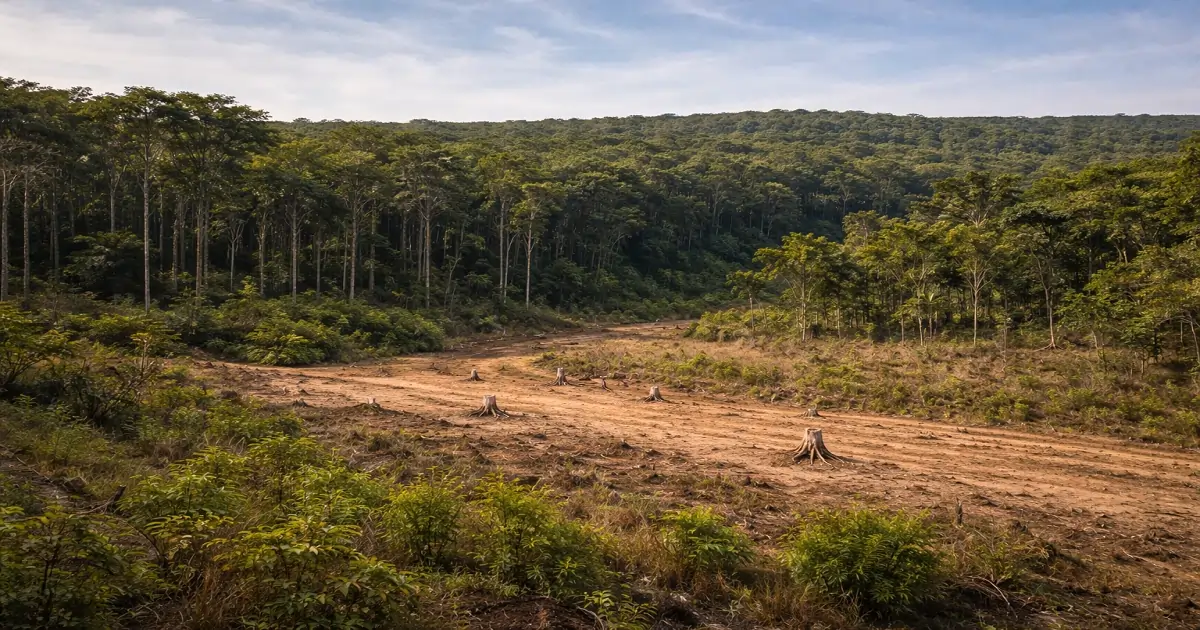
Cattle ranching is the leading cause of deforestation in the Amazon. Large areas are cleared for pasture and crops. Illegal logging further accelerates forest loss. Mining operations damage soil and waterways.
Deforestation increases fire risk and reduces biodiversity. Once cleared, forests take decades to recover.
Conservation Efforts and Global Responsibility
Conservation efforts aim to protect remaining forest areas. Protected zones and national parks now cover large regions. Governments use monitoring systems to track forest change.
International cooperation supports funding and enforcement. Long-term protection requires shared responsibility.
Role of Indigenous Communities
Indigenous communities have lived in the Amazon rainforest for thousands of years. They manage land using traditional knowledge. Studies show lower deforestation rates in indigenous territories.
Their practices support biodiversity and forest health. Recognizing indigenous land rights strengthens conservation outcomes. Their role remains essential for the Amazon’s future.
The Future of the Amazon Rainforest
Climate change presents new challenges for the Amazon. Rising temperatures increase drought and fire risk. Rainfall patterns may shift over time. These changes could weaken forest resilience.
Scientific research helps track these trends. Monitoring supports early action and effective policy. The forest’s future depends on informed global decisions.
Conclusion
The Amazon Rainforest size makes it the largest rainforest on Earth, covering about 2.6 million square miles across much of South America. It stretches through several countries and forms one continuous forest system.
This vast physical scale allows the rainforest to influence climate, water cycles, and ecosystems far beyond its borders. Its size supports millions of plant and animal species and enables natural processes to function at a global level.
When large areas of this forest are lost, the effects are felt worldwide. Understanding how big the Amazon is helps explain why it holds such a critical place on the planet. Protecting its scale means protecting the natural balance it helps maintain.