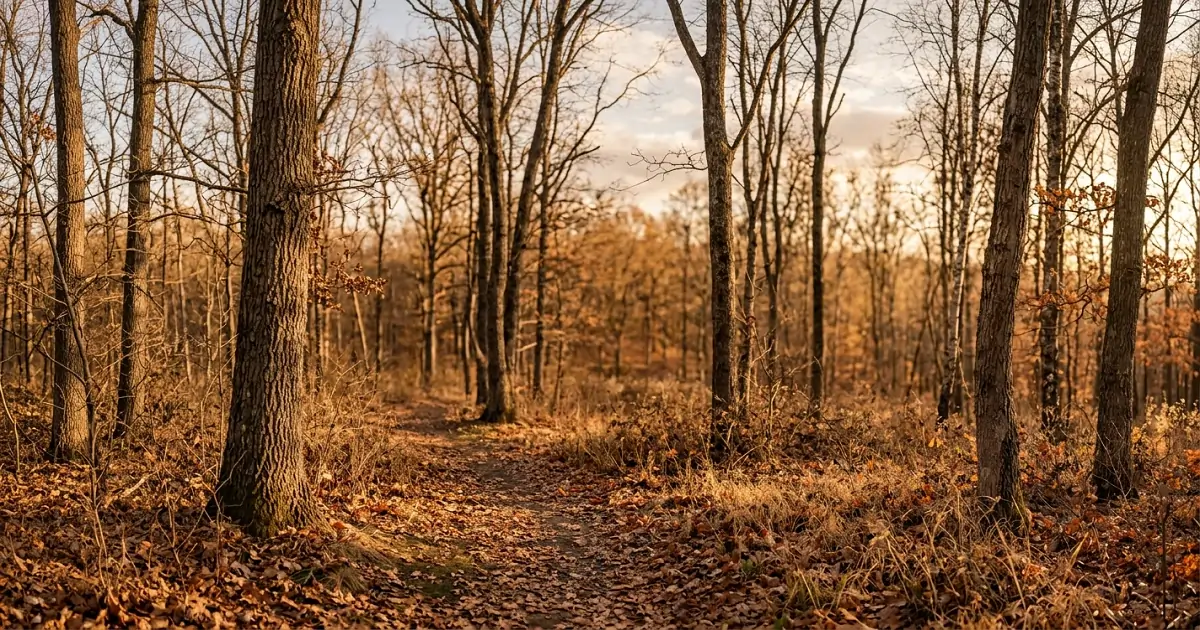
Dry deciduous forests are one of the most widespread forest types in tropical regions. These forests grow in areas with seasonal rainfall and long dry periods. As a result, they show clear changes in climate and vegetation throughout the year. Trees shed their leaves during dry months, giving the forest a bare look
However, with the arrival of rain, these forests quickly turn green and active again. This cycle supports many plant and animal species. In India, dry deciduous forests are found across central and southern regions, shaping important natural landscapes.
Understanding their climate and vegetation helps explain how these forests function. It also shows why they are important for ecosystems, wildlife, and human life.
What Are Dry Deciduous Forests?
Dry deciduous forests are forests where trees lose their leaves during the dry season. This usually happens in the dry months when water becomes scarce. As a result, the forest looks open and less dense for some time.
Dry deciduous forests are one of the major types of natural vegetation. They are mainly found in tropical and subtropical regions with moderate rainfall. These areas have clear wet and dry seasons.
In India, these forests are spread across central and southern regions. States like Madhya Pradesh and Maharashtra have large areas of this vegetation. During the rainy season, the forest becomes green and supports rich life.
However, in the dry season, trees shed their leaves to conserve water. This natural process helps them survive harsh conditions. Therefore, dry deciduous forests show strong seasonal changes.
Climate of Dry Deciduous Forests
The climate of dry deciduous forests is marked by clear seasonal changes. These forests grow in regions where rainfall is moderate but not evenly distributed. As a result, long dry periods follow a short wet season.
This seasonal pattern strongly affects the ecosystem. Plants and animals must adjust to both water availability and scarcity. Therefore, the climate plays a key role in shaping the structure and function of these forests in tropical dry forest regions.
Rainfall and Temperature Patterns
This climate is shaped by moderate rainfall and seasonal variation. These forests receive around 70 to 150 cm of rainfall each year. Most of this rain falls during the monsoon season.
However, rainfall is uneven and followed by long dry periods. This creates water stress for plants. Therefore, only drought-resistant species can survive here.
Temperatures are often high, especially in summer. In many regions, temperatures rise above 40°C. Winters are shorter and relatively mild.
This combination of rainfall and temperature defines the dry deciduous forest climate. It also influences the type of vegetation found in these regions.
Seasonal Cycle and Dry Period
Dry deciduous forests experience two main seasons: wet and dry. During the wet season, rainfall supports plant growth. Trees develop fresh leaves, and the forest becomes dense.
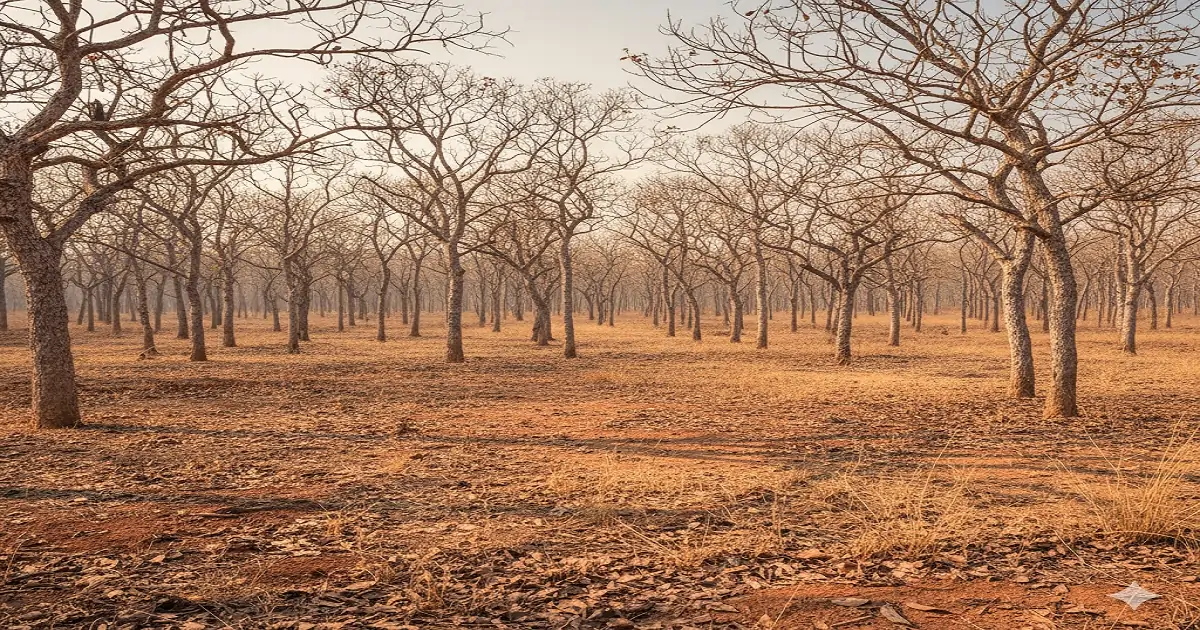
However, the dry season brings a sharp change. Water becomes limited, and soil moisture decreases. Therefore, trees shed their leaves to reduce water loss.
This leaf shedding helps trees survive long dry periods. As a result, the forest appears bare during these months. This is a natural survival strategy.
When the rains return, the forest quickly becomes green again. New leaves grow, and animal activity increases. This seasonal cycle keeps the ecosystem balanced.
Vegetation in Dry Deciduous Forests
Vegetation in dry deciduous forests is adapted to survive changing climatic conditions. Trees, shrubs, and grasses grow in ways that help them handle dry and wet periods. As a result, the forest does not remain dense throughout the year.
During the rainy season, the vegetation becomes green and active. However, in the dry season, many trees shed their leaves during the dry season. This cycle shapes the appearance and behavior of plant life in deciduous forest ecosystems.
Common Trees in Dry Deciduous Forests
Dry deciduous forests support many tree species that can survive seasonal dryness. In India, teak is one of the most common trees. It is widely used for timber due to its strength.
Sal is another important tree found in these forests. It supports both wildlife and local communities. Besides this, acacia trees are common because they tolerate dry conditions.
Bamboo also grows in many areas and plays an important role. It provides food and shelter for animals. It is also useful for people.
These trees are well adapted to the dry deciduous forest climate. Therefore, they dominate the vegetation of these regions.
Adaptations of Vegetation
Plants in dry deciduous forests show special adaptations to survive water scarcity. One key feature is deep roots. These help trees reach underground water during dry periods.
Many trees also have thick bark. This reduces water loss and protects them from heat. Some plants have small leaves to reduce evaporation.
Leaf shedding is another important adaptation. During dry months, trees drop their leaves to conserve water. This helps them survive until rainfall returns.
Furthermore, these adaptations allow plants to recover quickly in the rainy season. As a result, dry deciduous forests remain stable and resilient ecosystems.
Distribution of Dry Deciduous Forests
Dry deciduous forests are widely spread across regions with moderate rainfall and clear seasonal patterns. These forests mainly grow in tropical and subtropical zones. Their distribution depends on climate, soil, and water availability.
They are not limited to one region. Instead, they appear in different parts of the world where similar environmental conditions exist. Therefore, understanding their distribution helps explain their ecological importance.
Distribution in India
In India, dry deciduous forests cover a large part of the central and southern regions. These forests are especially common in states like Madhya Pradesh, Maharashtra, and Karnataka. They also extend into Telangana and Chhattisgarh.
These regions receive moderate rainfall and have long dry seasons. As a result, they provide ideal conditions for this type of vegetation. The forests support both wildlife and human livelihoods.
These forests form a major part of vegetation types in India They connect different ecosystems and play an important role in maintaining ecological balance.
Global Distribution
Dry deciduous forests are also found in many parts of the world. In Africa, they grow in regions with seasonal rainfall and dry climates. Similar forests exist in Southeast Asia, especially in countries with monsoon patterns.
In South America, these forests appear in areas with tropical climates and dry seasons. Although the species may differ, the overall structure remains similar. Therefore, dry deciduous forests are globally important ecosystems.
Wildlife in Dry Deciduous Forests
Dry deciduous forests support a wide range of animal species. These forests provide food, shelter, and breeding grounds for many animals. The seasonal changes also influence animal behavior and movement.
Herbivores like deer and elephants are commonly found here. They feed on grasses, leaves, and forest plants. Carnivores such as tigers and leopards depend on these herbivores for survival.
Besides large animals, many birds, reptiles, and insects live in these forests. They help maintain ecological balance. Therefore, dry deciduous forests play an important role in supporting biodiversity.
Difference Between Moist and Dry Deciduous Forests
Dry and moist deciduous forests are both important forest types, but they differ in several ways. These differences mainly arise due to variations in rainfall and seasonal patterns. As a result, their vegetation and structure are also different.
Dry deciduous forests receive lower rainfall and have a longer dry season. Therefore, trees shed leaves for a longer period. The vegetation is more open and less dense.
In contrast, moist deciduous forests receive higher rainfall. They remain green for a longer time and have denser vegetation. The dry period is shorter, so leaf fall is less noticeable.
Key differences can be understood as follows:
- Rainfall: Dry forests receive lower rainfall, while moist forests receive higher rainfall.
- Vegetation density: Dry forests have sparse vegetation, whereas moist forests are dense.
- Dry season: Dry forests experience a longer dry period, while moist forests have a shorter one.
- Leaf fall: Leaf shedding is more prolonged in dry forests, while it is shorter in moist forests.
These differences highlight how climate influences forest types and their characteristics.
Seasonal Changes in Deciduous Forests
Dry deciduous forests show clear seasonal changes throughout the year. These changes mainly depend on rainfall and temperature. As a result, the forest looks very different in each phase.
During the dry season, trees shed their leaves to conserve water. This period makes the forest appear bare and open. It also reduces water loss and helps trees survive harsh conditions.
With the arrival of the monsoon, new leaves grow quickly. The forest becomes green and full of life again. This is the active growth phase for plants and animals.
Between these two phases, short transition periods occur. During this time, leaves either fall or regrow. Therefore, seasonal changes play a key role in shaping dry deciduous forests.
Importance of Dry Deciduous Forests
Dry deciduous forests are important for both nature and people. They support ecosystems, provide resources, and help maintain environmental balance. Therefore, their role is both ecological and economic.
Ecological Importance
Dry deciduous forests help protect soil from erosion. Tree roots hold the soil together, especially during heavy rains. This reduces land degradation and maintains soil fertility.
They also store carbon, which helps reduce the effects of climate change. In addition, these forests provide habitat for many animals and plants. Therefore, they support biodiversity and ecosystem stability.
Economic Importance
These forests are valuable sources of timber, especially teak and sal. These woods are widely used in construction and furniture. Therefore, they support local and national economies.
Bamboo is another important resource found in these forests. It is used for making tools, houses, and handicrafts. Besides this, many communities depend on forest resources for their daily needs.
Their role connects closely with the broader importance of natural vegetation.
Threats and Conservation of Dry Deciduous Forests
Dry deciduous forests face several threats that affect their health and survival. One major threat is deforestation due to agriculture and urban expansion. This reduces forest cover and destroys habitats.
Climate change also impacts these forests by altering rainfall patterns. Longer dry periods can stress vegetation and reduce growth. Therefore, ecosystems become less stable over time.
Habitat fragmentation is another concern. Roads and development divide forests into smaller parts. This affects animal movement and breeding.
Conservation efforts aim to protect and restore these forests. Governments create protected areas and promote sustainable use of resources. In addition, community participation plays a key role in conservation.
Conclusion
Dry deciduous forests show a unique balance between climate and vegetation. Their growth depends on moderate rainfall and long dry periods. As a result, trees shed leaves to survive water scarcity and grow again with the rains.
These forests support many plant and animal species. They also provide valuable resources like timber, bamboo, and other forest products. Therefore, they are important for both ecosystems and human livelihoods.
However, increasing threats like deforestation and climate change are affecting their stability. Protecting these forests is essential to maintain ecological balance. Sustainable use and conservation efforts can help preserve them for the future.