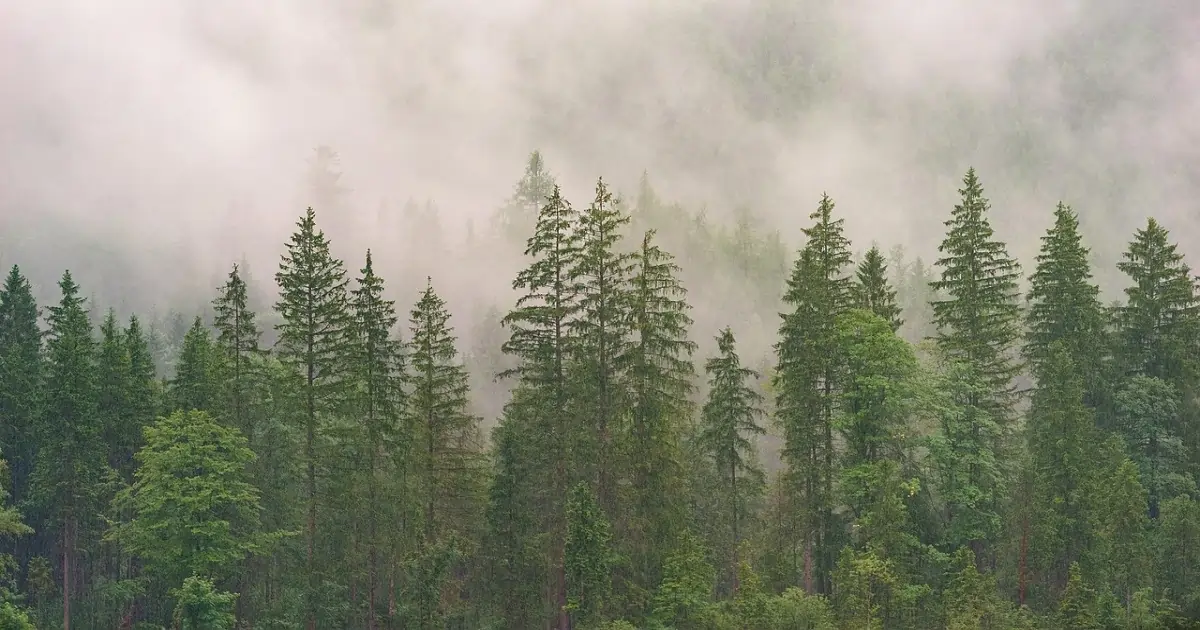
Temperate coniferous forest is a major type of natural vegetation found in regions with cool climates. These forests are dominated by evergreen trees such as pine, fir, and spruce. They grow in areas where winters are cold and summers remain mild. As a result, the environment supports gradual plant growth.
The climate of these forests plays a key role in shaping their vegetation. Needle-like leaves help trees conserve water and survive harsh winters. Besides, the dense canopy creates a cool and moist habitat for smaller plants like mosses and ferns.
These forests are also important for the environment. They store carbon, support wildlife, and help regulate the water cycle. Therefore, understanding these forests, along with their climate and vegetation, helps explain their role in maintaining ecological balance.
What is a Temperate Coniferous Forest?
A temperate coniferous forest is a type of forest found in regions with moderate climates and seasonal changes. These forests are mainly covered with evergreen trees such as spruce, fir, and pine. They grow in areas where winters are cold and summers are mild. Therefore, the climate supports slow but steady plant growth throughout the year.
All temperate coniferous forests belong to the broader group of coniferous forests. However, not all coniferous forests are temperate. Some exist in colder regions like boreal forests, while others grow in warmer zones. In contrast, temperate coniferous forests develop in regions with balanced temperature and rainfall.
These forests also differ from temperate deciduous forests. Deciduous trees shed their leaves in autumn, while coniferous trees remain green all year. This adaptation helps them survive harsh winters and continue photosynthesis when conditions allow.
As one of the major forest types, temperate coniferous forests play an important role in sustaining ecosystem functions across temperate regions.
Key Characteristics of Temperate Coniferous Forests
Temperate coniferous forests have distinct features that help them survive cold climates. These characteristics also shape the entire ecosystem. From tree structure to soil type, each feature supports plant and animal life. Therefore, understanding these traits helps explain how these forests function.
Evergreen Tree Dominance
These forests are mainly covered with evergreen conifers. These trees keep their leaves throughout the year. As a result, they can continue photosynthesis even in cold seasons. This dominance gives the forest a green appearance all year.
Needle-like Leaves and Adaptations
Coniferous trees have needle-shaped leaves that reduce water loss. This feature is important during freezing winters. Besides, these leaves resist damage from snow accumulation. Their waxy coating also protects them from harsh winds and low temperatures.
Dense Canopy and Low Light Conditions
The thick canopy formed by tall trees blocks much sunlight. Therefore, very little light reaches the forest floor. This creates a cool and moist environment below. As a result, only shade-tolerant plants can grow in these conditions.
Soil and Nutrient Conditions
The soil in these forests is usually acidic and low in nutrients. Fallen needles decompose slowly and form a thick layer. This limits the growth of many plant species. However, mosses and ferns grow well in such soil conditions.
Climate of Temperate Coniferous Forests
The climate of temperate coniferous forest regions plays a key role in shaping their ecosystem. They develop in region with cold winters and mild summers. Temperature and precipitation patterns directly influence vegetation growth. Therefore, climate remains a defining factor for this forest type.
Temperature Patterns
Temperate coniferous forests experience cold winters, often below freezing. Summers are mild, with temperatures ranging between 10°C and 20°C. This moderate warmth allows slow plant growth. However, extreme cold in winter slows down biological activity and conserves energy, a pattern commonly observed in coniferous forest ecosystems.
Precipitation and Snowfall
These forests receive moderate to high precipitation throughout the year. Rainfall supports plant growth during warmer months. In winter, precipitation mainly occurs as snow. This snow cover protects plant roots by acting as an insulating layer.
Seasonal Changes and Their Effects
Seasonal variation strongly influences life in such ecosystems. During winter, plants enter dormancy to survive low temperatures. Many animals either hibernate or adapt to cold conditions.
In spring and summer, melting snow increases water availability. Plants grow actively, and animals become more active. Furthermore, longer daylight hours support photosynthesis.
During autumn, the ecosystem prepares for winter again. Trees retain their needles, unlike deciduous forests. This helps them continue limited photosynthesis even in colder months.
Vegetation in Temperate Coniferous Forests
Vegetation in temperate coniferous forests is adapted to survive cold and moist conditions. The forest is mainly covered with tall evergreen trees. However, smaller plants also grow beneath them. Together, they form a balanced and diverse ecosystem.
Dominant Tree Species
The main trees found in these ecosystems include pine, fir, and spruce. These trees grow tall and straight, forming a dense canopy. Their needle-like leaves reduce water loss and resist cold damage. Besides, their strong trunks help them withstand heavy snowfall and wind.
Understory Vegetation
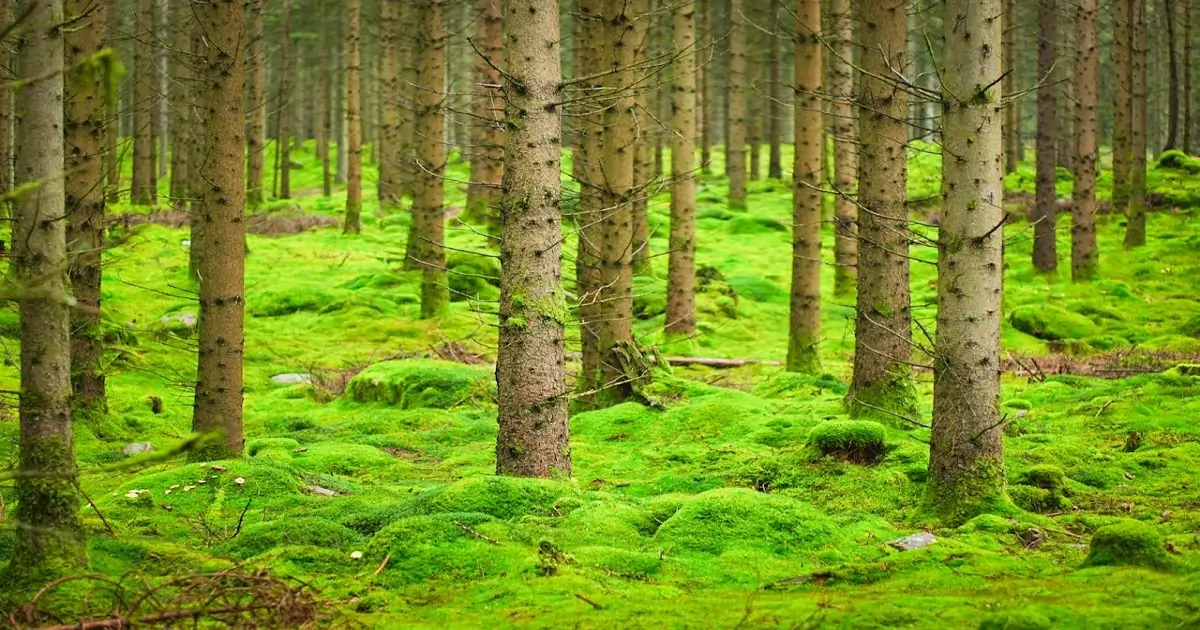
Below the canopy, limited sunlight reaches the forest floor. As a result, only shade-tolerant plants grow here. Mosses, ferns, and small shrubs are common in the understory. These plants thrive in cool and moist conditions and provide habitat for small organisms.
Adaptations of Vegetation to Climate
Vegetation in temperate coniferous forests shows several adaptations to survive harsh conditions. Needle-like leaves reduce water loss and prevent freezing damage. Many plants remain dormant during winter to conserve energy.
Evergreen trees continue photosynthesis whenever conditions allow. Furthermore, thick bark protects them from cold and wind. These adaptations help vegetation survive and maintain ecological balance.
Understanding these adaptations also connects with broader natural vegetation patterns.
Geographic Distribution of Temperate Coniferous Forests
Temperate coniferous forest regions are spread across different parts of the world. These forests mainly occur in the Northern Hemisphere. However, they also appear in some southern regions with suitable climates. Their distribution depends on temperature, rainfall, and altitude. Thus, they grow in areas that provide cool and stable environmental conditions.
Major Regions
Temperate coniferous forests are widely found in North America, especially in the Pacific Northwest of the United States and Canada. These regions have cool climates and receive enough rainfall.
In Europe, they extend across countries like Norway, Sweden, and parts of Russia. These areas provide the cold conditions needed for coniferous growth.
In Asia, such forests are present in countries like Japan and China. These regions also offer suitable climates with seasonal changes. In India, temperate coniferous forests are mainly found in the Himalayan region, where altitude and climate support their growth. This regional pattern is also reflected in natural vegetation patterns in India, these forests cover large areas across continents.
Latitudinal and Altitudinal Range
These forests usually grow between 30° and 60° latitude in both hemispheres. This range provides moderate temperatures and seasonal variation. Thus, it supports the growth of evergreen trees.
Besides latitude, altitude also plays an important role. In mountainous regions, these forests can grow at higher elevations. As height increases, temperature decreases, creating suitable conditions.
Thus, temperate coniferous forests can exist from coastal areas to high mountain slopes. This wide range increases their ecological importance.
Temperate Coniferous Forest as Natural Vegetation
Temperate coniferous forests are an important type of natural vegetation shaped by climate and environmental conditions. They develop in regions with moderate temperatures and seasonal variation, which influence their structure and distribution.
As a result, they represent a distinct vegetation type within temperate regions and help explain broader global vegetation patterns.
Ecological Importance of Temperate Coniferous Forests
Temperate coniferous forests play a vital role in maintaining environmental balance. These forests act as major carbon sinks. They absorb carbon dioxide from the atmosphere and help reduce climate change effects. These forests store large amounts of carbon in both biomass and soil layers.
They also help regulate the water cycle. Their dense canopy captures rainfall and reduces surface runoff. This process helps maintain groundwater levels and prevents soil erosion.
Besides, these forests provide habitat for many species of animals and birds. From large mammals to small insects, many organisms depend on this ecosystem. The vegetation forms the base of the food chain. When these forests are degraded or removed, their ecological functions are disrupted, leading to issues such as deforestation and forest degradation.
Understanding their role becomes clearer when connected to the broader importance of natural vegetation.
Human Impact on Temperate Coniferous Forests
Human activities have affected temperate coniferous forest ecosystems in many ways. Deforestation is one of the major threats. Trees are cleared for agriculture, settlements, and infrastructure. As a result, natural habitats are lost, and biodiversity declines.
Logging is another important factor. These forests provide valuable timber, so large areas are cut for wood. However, excessive logging disturbs the ecological balance. It also reduces the forest’s ability to store carbon.
Besides these impacts, conservation efforts are increasing. Governments and organizations are promoting sustainable forest management. Reforestation and protected areas also help restore damaged ecosystems. Therefore, careful use of resources is necessary to protect these forests.
Temperate Coniferous Forests in Regional Context
Temperate coniferous forests are commonly found in mountainous regions. Higher altitudes provide cooler temperatures and suitable conditions for their growth. Hence, these forests often cover slopes and highland areas.
In India, such forests are mainly present in the Himalayan region. States like Jammu and Kashmir have large areas of coniferous vegetation. These forests play an important role in maintaining local climate and biodiversity.
This pattern can be seen clearly in natural vegetation of Jammu and Kashmir, where altitude and climate shape forest distribution.
Conclusion
Temperate coniferous forest ecosystems are defined by their climate and unique vegetation. cool climatic create ideal conditions for dominant conifer species. Their needle-like leaves and dense canopy help them survive harsh environments. As a result, vegetation remains adapted and stable throughout the year.
The forest floor also supports mosses, ferns, and shrubs that grow in cool and shaded conditions. Together, this vegetation forms a balanced ecosystem and supports diverse wildlife. Therefore, these forests play an important role in maintaining ecological stability.
As one of the major types of natural vegetation, they show how climate shapes plant life. However, human activities continue to affect these forests. Protecting their vegetation is essential for preserving biodiversity and environmental health.