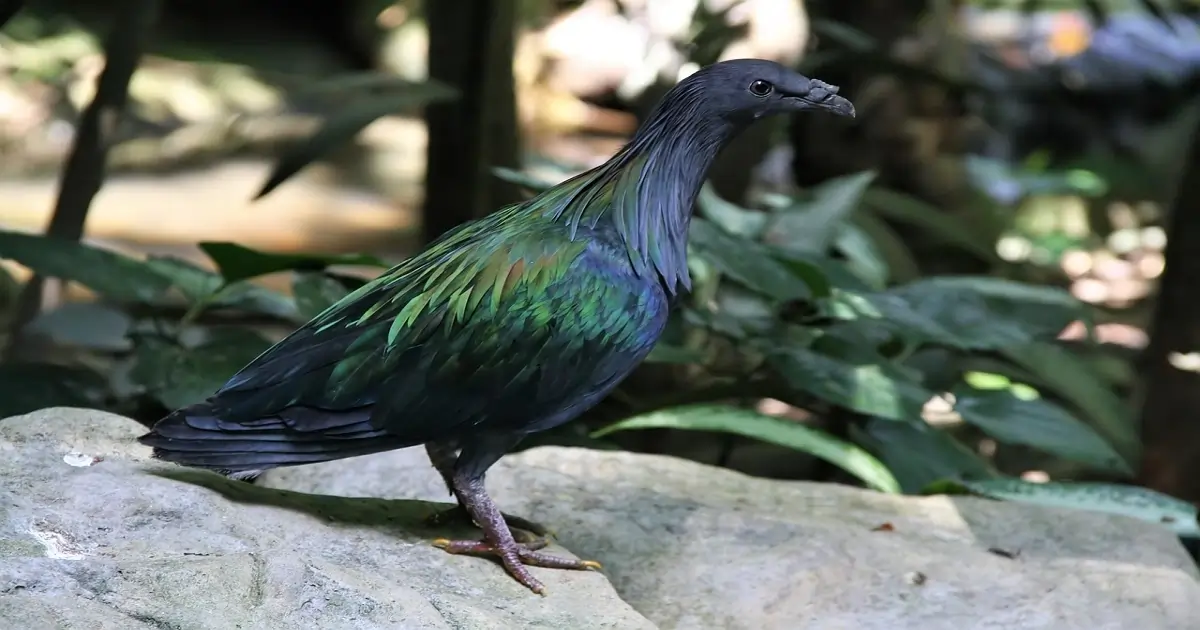
The Nicobar Pigeon lives on remote tropical islands across Southeast Asia and the Pacific. It is mainly found on the Nicobar and Andaman Islands, along with a few nearby island groups. Its metallic green feathers, white tail, and bright red legs make it one of the most striking island bird species.
Unlike city pigeons, it avoids human settlements and depends on quiet coastal forests and natural shorelines.
The focus of this post is Nicobar Pigeon characteristics and habitat, which explain how this bird survives in isolated environments. As a rare pigeon species, it relies on undisturbed islands where food sources remain stable. These areas form part of sensitive tropical bird ecosystems shaped by natural balance.
Besides its appearance, the Nicobar Pigeon helps spread seeds while feeding. Therefore, protecting this bird also supports island biodiversity and long-term ecosystem health.
Nicobar Pigeon Overview and Taxonomic Background
The Nicobar Pigeon (Caloenas nicobarica) is a rare bird known for its strong link to island ecosystems. It belongs to a group of pigeons that evolved far from mainland habitats. Because of this isolation, the species developed traits that differ from common urban pigeons.
Its survival depends on quiet islands with limited human activity. Therefore, understanding its background helps explain its ecological value.
This bird also draws scientific interest due to its place in avian evolution. Researchers often study it to understand how island bird species adapt over time. Its existence highlights the wide range of forms seen across global bird diversity, shaped by geography and natural selection.
Scientific Classification and Evolutionary Significance
The Nicobar Pigeon belongs to the Columbidae family, which includes pigeons and doves. Within this group, it holds special importance. Scientists identify it as the closest living relative of the extinct dodo and the Rodrigues solitaire. This connection provides valuable insight into how island birds evolved.
Unlike its extinct relatives, the Nicobar Pigeon retained its ability to fly. This trait allowed it to escape predators and move between islands. As a result, it survived while other island birds disappeared. Its evolutionary history helps researchers understand extinction patterns among island species.
Why the Nicobar Pigeon Is Biologically Unique
One reason this bird stands out is its iridescent plumage. Its feathers reflect green, bronze, and blue shades under sunlight. This feature is rare among pigeon species. The white tail and red legs further add to its distinct appearance.
Besides appearance, its biology suits island life. It forages on the forest floor and nests in trees for safety. These traits place it in a unique ecological niche. Therefore, it plays a specific role in maintaining balance within island habitats.
Physical Characteristics of the Nicobar Pigeon
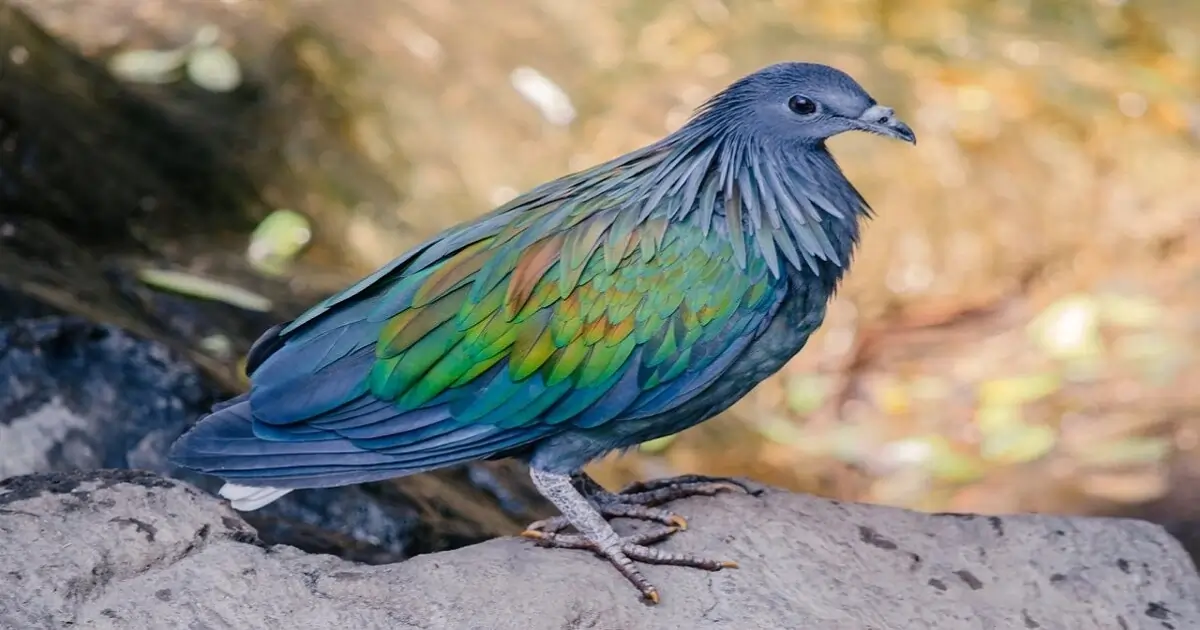
The physical traits of the Nicobar Pigeon help with easy identification. It is larger and more muscular than many pigeon species. Its body shape supports short flights between islands and strong movement on land. These features allow it to survive in remote environments where food sources vary.
Many people search for details about the Nicobar Pigeon appearance due to its striking look. Its color pattern, size, and posture differ clearly from city pigeons. These differences reflect its adaptation to island forests rather than urban spaces.
Size, Plumage, and Distinctive Features
The Nicobar Pigeon measures about 40 centimeters in length. Its weight usually ranges between 460 and 600 grams. This gives it a solid and sturdy build. The plumage shows metallic green, bronze, and blue tones that shimmer in natural light.
A bright white tail contrasts sharply with the darker body. Its legs are deep red, which is uncommon among pigeons. The head appears dark gray, giving the bird a balanced color pattern. These features make it one of the most colorful pigeon species.
Adaptations for Island Living
Strong legs help the Nicobar Pigeon walk and forage on forest floors. It spends much of its time searching for fallen fruits and seeds. Its wings support short-distance flight rather than long soaring journeys.
This bird prefers moving between nearby islands instead of staying airborne for long periods. Such traits suit island-adapted birds that depend on limited habitats. Therefore, its physical design directly supports survival in isolated tropical environments.
Behavior, Diet, and Social Structure
The Nicobar Pigeon shows behavior shaped by island life and limited resources. It spends much of its day on the forest floor, moving carefully while searching for food. However, it remains alert to danger and quickly escapes when disturbed.
This balance between ground activity and flight helps it survive in remote habitats.
Besides feeding, social interaction plays an important role in daily life. These birds prefer calm environments and avoid crowded areas. Therefore, their behavior reflects adaptation to quiet islands rather than busy landscapes.
Feeding Habits and Foraging Behavior
The Nicobar Pigeon feeds mainly on fallen fruits and seeds found on the forest floor. It also eats small invertebrates when available. This varied diet helps it survive during seasonal food changes.
While foraging, it swallows seeds whole. These seeds later pass through the body and spread across islands. As a result, the bird supports natural plant growth and forest renewal.
Social Behavior and Breeding Patterns
This species usually lives in small flocks, which helps reduce risk from predators. During breeding season, pairs form strong bonds. They build simple nests in trees, away from ground threats.
Both parents care for a single egg and share feeding duties. This cooperation improves survival chances for the chick. Therefore, strong parental care defines their social structure.
Natural Habitat of the Nicobar Pigeon
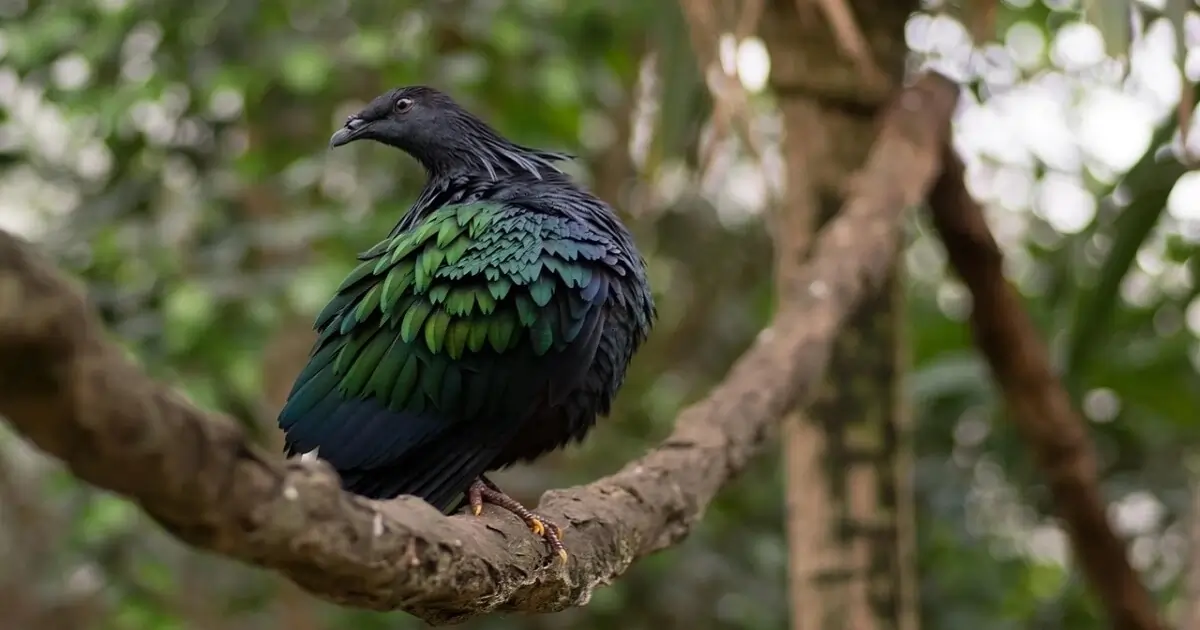
The Nicobar Pigeon habitat consists of remote islands with dense vegetation. These areas offer shelter, food, and nesting sites. Unlike urban pigeons, this bird avoids human presence. Therefore, habitat quality directly affects its survival.
Tropical island forests provide stable conditions that support long-term feeding and breeding. These environments remain sensitive to disturbance, which makes habitat protection essential.
Geographic Distribution Across Islands
The Nicobar Pigeon lives across parts of Southeast Asia and the Pacific. It is commonly found on the Nicobar and Andaman Islands. Small populations also occur in Indonesia and nearby island groups.
These locations share similar climates and vegetation. Warm temperatures and seasonal rainfall support food availability throughout the year.
Preferred Habitat Conditions
This bird prefers coastal forests and mangroves with thick tree cover. Such areas provide safety from predators and harsh weather. It nests high in trees to avoid ground threats.
Low human disturbance remains crucial. Therefore, untouched tropical island forests and coastal bird habitats offer the best conditions for survival.
Explore More: List of Globally Vulnerable Animal Species
Migration and Movement Between Islands
The Nicobar Pigeon moves between islands rather than following long migration routes. These movements often depend on food availability and seasonal changes. However, it does not travel great distances at once.
Its strong wings allow short to medium flights across open water. This ability helps it reach nearby islands safely. Besides movement, this behavior supports seed dispersal across island chains.
As seeds spread, plant diversity increases. Therefore, even limited migration plays an important role in maintaining island ecosystems.
Conservation Status and Population Trends

The Nicobar Pigeon conservation status reflects growing concern among researchers. Although still present across several islands, its population continues to decline. Therefore, monitoring trends remains important for long-term protection.
Population estimates remain uncertain due to remote habitats. However, consistent declines suggest increasing pressure from human activity, placing the Nicobar pigeon among India’s rare bird species discussed in rare birds in India: what makes them unique and endangered.
IUCN Status and Population Decline
The Nicobar Pigeon is listed as Near Threatened on the IUCN Red List. This status indicates a high risk of future population loss.
Limited surveys make exact numbers difficult to confirm. However, reduced sightings and habitat loss point toward ongoing decline among endangered island birds.
Major Threats to Survival
Habitat loss remains the biggest threat. Forest clearing reduces nesting and feeding areas. Hunting for meat and feathers also affects numbers.
Human encroachment increases disturbance and illegal trade risks. Therefore, controlling these threats is essential to prevent further bird population decline.
Ecological Importance of the Nicobar Pigeon
The Nicobar Pigeon plays a vital role in island ecosystems. It supports natural balance through its daily feeding habits. While searching for food, it spreads seeds across forest floors. Therefore, new plants grow in areas where seeds would not reach alone.
This process helps forests regenerate over time. Healthy forests then support other birds, insects, and animals. Besides that, plant diversity improves soil stability on islands. This reduces erosion caused by wind and rain.
The bird also contributes to biodiversity maintenance. Its presence signals a healthy habitat with limited disturbance. However, when the species declines, ecosystem health often weakens. Protecting the Nicobar Pigeon therefore protects many other island species.
Future Conservation Challenges and Protection Efforts
Protecting the Nicobar Pigeon remains challenging. Habitat loss continues as forests shrink. Therefore, restoring island forests has become a key priority. Native tree planting helps rebuild feeding and nesting areas.
Anti-poaching laws also play an important role. Strict enforcement reduces illegal hunting and trade. However, laws alone are not enough. Public awareness remains limited in many regions.
Research gaps further slow conservation progress. Population data remains incomplete due to remote habitats. Besides stronger protection, long-term monitoring is needed. Combined efforts can improve survival chances for this rare island bird.
Interesting Facts About the Nicobar Pigeon
- It is one of the most colorful pigeon species found on islands.
- It swallows small stones to help digest hard seeds.
- It forms long-term pair bonds with a single mate.
- It avoids human settlements and prefers quiet forests.
- It nests in trees to stay safe from ground predators.
- It can fly between islands despite its heavy body.
- Its red legs are uncommon among pigeon species.
Common Questions About the Nicobar Pigeon
Many people are curious about the Nicobar Pigeon due to its rare status and unique traits. These common questions address its rarity, flight ability, and evolutionary background. Clear answers help readers understand how this bird survives and why it needs protection.
Is the Nicobar Pigeon a Rare Species?
Yes, the Nicobar Pigeon is considered rare. Its population is limited to scattered islands across Southeast Asia. It avoids cities and farms, which restricts its range. Therefore, habitat loss affects it more than urban pigeons.
Besides limited distribution, hunting and forest clearing reduce numbers. These pressures make the species vulnerable. Conservation efforts aim to prevent further decline.
Can the Nicobar Pigeon Fly?
The Nicobar Pigeon can fly, but not over long distances. It uses strong wings for short and medium flights. This helps it escape predators and move between nearby islands.
However, it spends much time on the ground while feeding. Therefore, flight supports survival rather than daily movement.
Is the Nicobar Pigeon Related to the Dodo?
Yes, scientists consider it the closest living relative of the extinct dodo. Both belong to the same bird family. They share similar skeletal traits shaped by island life.
Unlike the dodo, the Nicobar Pigeon retained flight ability. This helped it survive environmental changes and predators.
Conclusion
The Nicobar Pigeon is a rare island bird with great ecological value. It supports forests by spreading seeds and maintaining balance. However, habitat loss and hunting threaten its future.
Protecting this species requires habitat restoration, law enforcement, and public awareness. Small actions can make a large difference when combined.
Using knowledge about Nicobar Pigeon characteristics and habitat helps guide conservation efforts. By protecting island birds, we also protect biodiversity. Responsible action today can ensure this unique pigeon survives for future generations.