Birds are among the most familiar animals on Earth. We see them in cities, forests, farms, and coastal regions. Because they live so close to us, many people wonder how many bird species are there in the world.
The most widely accepted estimate today suggests that there are around 10,000 to 11,000 bird species worldwide
However, this number is not fixed. Scientists continue to study birds, discover new species, and revise earlier classifications. Therefore, the global count changes over time.
Learning how many bird species are there also helps us understand biodiversity. It reveals how life adapts to different environments. Besides that, bird diversity reflects ecosystem health. When bird populations change, nature often sends an early signal.
So, How Many Bird Species Are There in the World?
The most widely accepted estimate suggests that there are around 10,000 to 11,000 bird species worldwide. This range represents all known living birds found across continents, islands, and oceans. However, scientists do not agree on a single fixed number.
The total number of bird species depends on how a species is defined. Some experts group very similar birds together. Others separate them based on behavior, genetics, or location. Therefore, the global bird species count changes slightly between scientific lists.
Besides that, research never stops. New bird species are still being identified, especially in remote regions. At the same time, older classifications are reviewed using better data. As a result, the estimated bird species worldwide remains a moving figure rather than a final answer.
Understanding this range helps explain why different sources report different totals. It also shows how science evolves with new knowledge.
Why Is the Exact Number of Bird Species Uncertain?
Many people expect a precise answer when asking how many bird species are there. However, nature rarely fits into fixed numbers. Several factors make the exact count uncertain.
Discovery of New Bird Species
New bird species are still being discovered today. Dense rainforests, isolated mountains, and remote islands often hide birds that scientists have not studied closely.
For example, some birds live in small areas and avoid human contact. When researchers finally observe them, they may realize the bird is unique. Therefore, each discovery increases the total number of bird species.
Differences in Scientific Classification
Scientists do not always agree on how bird species are identified. Some rely on physical appearance. Others focus on song patterns, breeding behavior, or habitat.
Because of these differences, bird species classification varies between scientific groups. One list may recognize a bird as a separate species. Another may treat it as part of a larger group.
Species Splits and Merges
Sometimes, a single bird species is split into two or more species. This happens when new evidence shows clear differences. In other cases, separate species are merged when similarities become clear.
These changes are normal in science. They reflect better understanding, not confusion. Therefore, the total number of bird species keeps adjusting over time.
How Scientists Count and Classify Bird Species
Counting bird species involves careful observation and long-term research. Scientists follow structured methods to ensure accuracy and consistency.
Role of Taxonomy in Bird Classification
Taxonomy is the system used to organize living organisms. In birds, taxonomy groups species based on shared traits such as size, feathers, beak shape, and behavior.
Scientists compare these features across populations. They also study where birds live and how they interact. This process helps identify whether birds belong to the same species or not.
Bird taxonomy allows researchers around the world to speak the same scientific language. Therefore, it plays a key role in estimating bird diversity.
If you want a clearer explanation of how scientists define species and compare traits, read our detailed guide on bird species diversity, classification, and key traits.
Genetic Research and Modern Techniques
Modern research uses genetic studies to compare bird DNA. This method reveals differences that are not visible to the eye.
For example, two birds may look similar but have distinct genetic patterns. DNA analysis helps confirm whether they are separate species. Besides that, genetic research improves accuracy in bird species identification.
As these techniques improve, classifications become clearer. Therefore, scientific understanding of bird diversity continues to grow.
Global Distribution of Bird Species

Bird species are not spread evenly across the planet. Some regions support far more birds than others. This uneven pattern helps explain bird diversity worldwide.
Climate, habitat type, and food availability shape where birds live. Therefore, some areas become biodiversity hotspots. Others support only a limited number of species.
Understanding bird species by region also helps scientists track environmental health. Changes in distribution often reflect deeper ecosystem shifts.
Seasonal movement is one major reason for these shifts, especially among migratory species, as explained in what migratory birds are and why they migrate. These geographic patterns also guide conservation planning.
Regions With the Highest Bird Diversity
Tropical regions hold the highest number of bird species. South America, parts of Africa, and Southeast Asia lead global counts.
For example, rainforests support hundreds of bird species within small areas. Warm temperatures and steady food sources allow many birds to coexist. As a result, these regions show exceptional diversity.
Among them, the Amazon rainforest stands out for bird richness, explored further in Amazon forest bird diversity and ecological roles.
Why Tropical Areas Have More Species
Tropical climates remain stable throughout the year. This stability allows birds to specialize in feeding and nesting.
Besides that, dense vegetation creates many habitats. Different birds adapt to different forest layers. Over time, this leads to the formation of new species.
Types of Bird Species Around the World
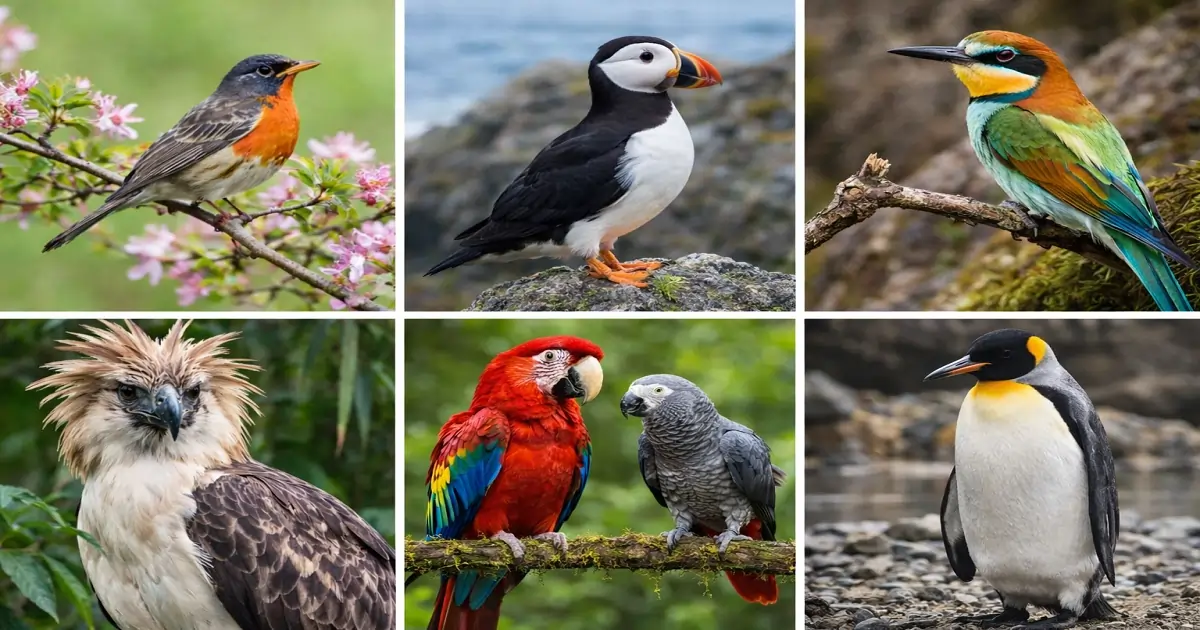
Bird species can be grouped based on population size, geographic range, and conservation status. This approach helps readers understand global bird diversity more clearly.
Each category explains how birds survive in different environments. It also shows which species are widespread and which face serious threats. By organizing birds this way, scientists and readers can better compare patterns across regions.
Despite this vast diversity, only a small number of birds are widely recognized, which we cover in famous species of birds around the world.
Furthermore, this structure supports focused studies on conservation, evolution, and habitat protection
Common Bird Species
Common bird species are those found across large geographic areas. They often live close to human settlements and adapt easily to changing environments.
Birds such as sparrows or crows thrive in cities, farms, and villages. Their success comes from flexible diets and nesting habits. Because they are widespread, these species help scientists track broad environmental changes over time.
Rare Bird Species
Rare bird species exist in very small populations or restricted habitats. They may appear only in specific forests, islands, or mountain ranges.
Many rare birds remain poorly studied due to limited sightings. Even small habitat disturbances can affect them quickly. This makes rare birds important indicators of localized ecosystem health and ideal subjects for focused conservation studies.
India hosts several such species with limited ranges, which are discussed in our article on rare birds in India.
Endangered Bird Species
Endangered bird species face a serious risk of extinction in the near future. Their populations decline due to habitat loss, pollution, and human activity.
For example, wetland birds suffer when water bodies dry up or become polluted. Monitoring endangered birds helps conservationists prioritize protection efforts and measure the success of recovery programs.
A broader global perspective on causes and conservation is available in endangered bird species around the world.
Endemic Bird Species
Endemic bird species are found only in one specific region of the world. They evolved in isolation and adapted to local conditions over long periods.
Because of their limited range, endemic birds depend entirely on local ecosystems. Any environmental change in that area can threaten their survival. This makes them critical for regional biodiversity studies.
One clear example is the Nicobar pigeon, covered in detail in our guide on the Nicobar pigeon’s characteristics, habitat, and conservation status.
Unique Bird Species
Unique bird species stand out because of unusual traits, behaviors, or adaptations. Some have rare feeding habits, while others show striking plumage or vocal patterns.
These birds often attract scientific attention because they reveal how evolution works under specific conditions. Studying unique species helps explain how birds adapt to diverse environments.
Explore More: Bird Species: Diversity, Classification & Characteristics
Why Bird Species Numbers Keep Changing Over Time

The total number of bird species does not remain constant. It changes due to both natural processes and human-driven factors.
New species are identified as research improves, while some species decline or disappear due to habitat loss. Besides that, climate shifts alter migration patterns and survival rates.
Over time, these forces reshape bird populations across regions. Understanding these trends offers a long-term view of biodiversity and ecosystem stability.
Habitat Change and Human Impact
Deforestation, farming, and urban growth reduce natural habitats. Birds lose nesting and feeding areas.
As habitats shrink, bird species decline. Some disappear before scientists fully document them.
Climate and Environmental Shifts
Climate change alters temperature and rainfall patterns. Birds may shift ranges to survive.
Some adapt successfully. Others fail to adjust. Therefore, bird population changes continue worldwide.
Why Knowing the Number of Bird Species Matters
Knowing how many bird species exist serves more than curiosity. It helps scientists measure ecosystem health and long-term stability.
Birds respond quickly to environmental changes. Their population trends often act as early warning signs. When bird diversity declines, habitats usually face stress.
Furthermore, tracking bird species numbers supports conservation planning and resource management. It also helps governments and researchers evaluate whether protection efforts are working.
Importance for Biodiversity Understanding
Bird species diversity reflects overall biodiversity. When bird numbers decline, other plants and animals often decline as well.
By tracking bird species, scientists gain early insights into ecosystem stress. This information helps protect habitats before damage becomes irreversible. It also guides long-term strategies for preserving natural balance.
Role of Birds in Ecosystems
Birds perform essential ecological roles. They spread seeds, control insects, and pollinate plants.
For example, fruit-eating birds help forests regenerate. Without birds, many ecosystems would struggle to function.
Understanding bird species numbers helps protect these natural services.
Key Takeaways on Global Bird Species Diversity
Bird species diversity reflects the richness of life across the planet. Scientists estimate that there are around ten to eleven thousand bird species worldwide. However, this number continues to change with new research.
Bird species are not evenly distributed. Tropical regions support the highest diversity, while colder areas host fewer species. Classification methods also influence the total count, which explains why estimates vary.
Birds can be grouped into common, rare, endangered, endemic, and unique species. Each group highlights different ecological patterns and conservation needs. Understanding these categories improves awareness and supports future research.
Overall, bird diversity offers valuable insight into ecosystem health. Tracking bird species helps scientists monitor environmental change and plan effective conservation efforts.
Frequently Asked Questions About Bird Species
Common questions people ask when learning about bird diversity worldwide.
Are new bird species still being discovered?
Yes, scientists continue to discover new bird species. Most discoveries happen in remote forests, islands, or mountain regions.
Some birds were previously mistaken for known species. Improved observation and research help identify these differences. Therefore, the global bird species count still changes over time.
Which region has the highest number of bird species?
Tropical regions contain the highest bird diversity. Areas near the equator support more species than colder regions.
Warm climates and rich vegetation create ideal conditions. As a result, birds evolve and diversify more rapidly in these regions.
Why do different sources report different bird species numbers
Different scientific groups use different classification rules. Some group similar birds together, while others separate them.
Because of this, totals vary slightly between sources. However, most estimates fall within a similar range.
Do bird species go extinct every year?
Yes, some bird species disappear over time. Habitat loss, pollution, and climate change increase extinction risk.
In some cases, species vanish before scientists fully study them. This makes conservation efforts especially important.
How do scientists confirm a new bird species?
Scientists study physical traits, behavior, and habitat. They also compare genetic information.
When clear differences appear, researchers may classify the bird as a new species. This process requires careful review.
Why are birds important indicators of environmental health?
Birds respond quickly to environmental changes. Their populations rise or fall as habitats change.
Because of this, scientists use birds to track ecosystem health. Changes in bird diversity often signal broader environmental shifts.
Explore Related Topics on Bird Species and Diversity
Understanding how many bird species exist worldwide is only the starting point. Bird diversity becomes clearer when examined through classification, regional distribution, behavior, and conservation status.
To provide deeper context, this article connects to focused guides that explore how bird species differ, where they are found, and why some face greater survival challenges. These related topics help explain global bird diversity from scientific, geographic, and ecological perspectives.
Readers interested in specific aspects of bird species—such as classification methods, regional rarity, migration patterns, or conservation concerns—can explore the related guides linked within this article for more detailed insights.
Conclusion
So, how many bird species are there in the world? Current estimates suggest roughly ten to eleven thousand species, spread across diverse habitats and regions. This number is not fixed, as discoveries and scientific updates continue.
Bird species play a vital role in maintaining ecological balance. They support seed dispersal, pest control, and natural regeneration. Therefore, changes in bird diversity often signal changes in ecosystem health.
Understanding how many bird species are there in the world also highlights the importance of conservation. Protecting birds means protecting the environments they depend on.
As research grows, our knowledge of bird diversity deepens, helping guide efforts to preserve nature for future generations.