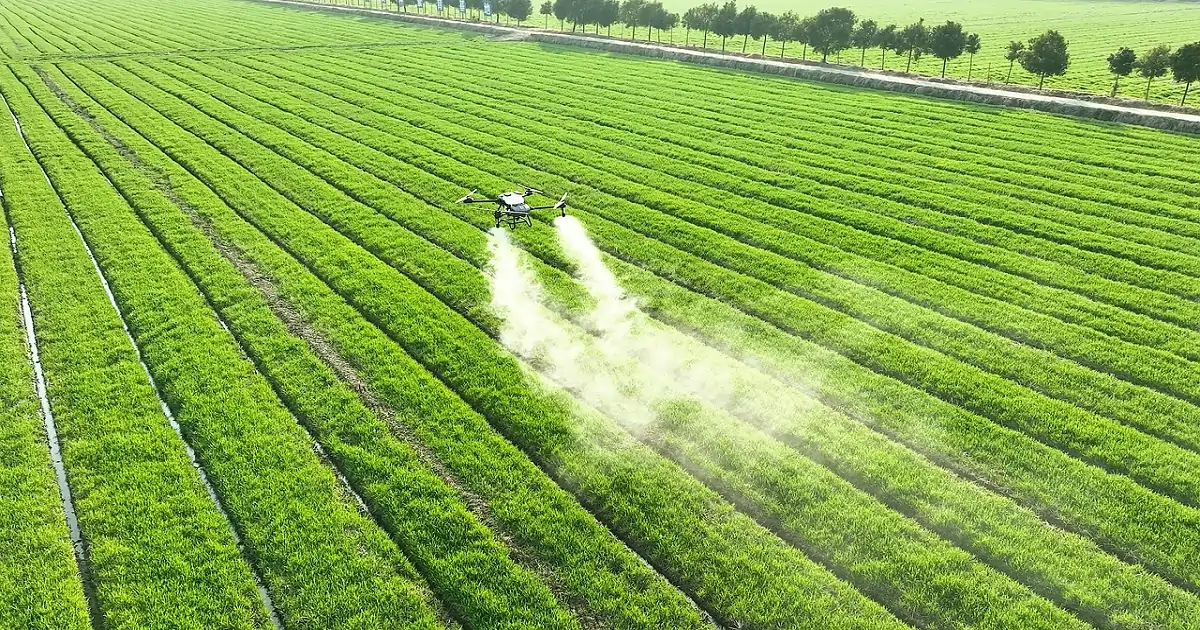
Agriculture supports daily food needs and rural livelihoods across the world. However, modern farming has also created new environmental challenges. As production expands, pollution from farming has become harder to ignore. Fields that feed communities can also release harmful substances into nature.
Agricultural pollution occurs when farming methods disturb air, water, and soil systems. Fertilizers, pesticides, and irrigation water often move beyond fields.
Therefore, the environmental impact of agriculture reaches rivers, groundwater, and nearby ecosystems. In many regions, this damage develops slowly and goes unnoticed.
The link between agricultural activities and pollution highlights an important concern. Food production remains essential, yet modern agricultural practices can strain natural resources. Understanding this connection helps explain the causes, types, effects, and prevention measures discussed in the sections ahead.
What Is Agricultural Pollution?
Agricultural pollution refers to environmental damage caused by farming activities. It differs from industrial or urban pollution because its sources spread across fields, farms, and rural landscapes. Instead of smoke or factory waste, the problem often begins quietly through soil, water, and air changes.
This form of pollution develops when fertilizers, pesticides, animal waste, or irrigation water move beyond farmland. As a result, nearby rivers, groundwater, and ecosystems receive unwanted substances. Over time, these changes affect natural balance and resource quality.
Farming-related pollution often goes unnoticed because it builds gradually. However, pollution caused by agriculture can travel long distances through runoff and air movement. Therefore, it stands as a distinct type of pollution with wide environmental reach, making it important to understand within broader pollution discussions.
Major Causes of Agricultural Pollution
Agricultural pollution begins with everyday farming decisions that affect natural systems. The causes of environmental pollution driven by human and natural factors help place these farming practices within a wider environmental context.
Many practices aim to increase yields quickly. However, they often release harmful substances into soil, water, and air. These changes happen gradually and spread beyond farm boundaries.
Modern agriculture relies on inputs that do not remain confined to fields. Rainfall, irrigation, and wind move substances across landscapes. Therefore, understanding the main causes helps explain how pollution develops before visible damage appears.
The following factors represent the most common sources of pollution linked to farming activities. Each one shows how routine practices can create environmental stress when poorly managed.
Excessive Use of Fertilizers and Pesticides
Chemical fertilizers support rapid plant growth, but excess nutrients rarely stay in place. When applied beyond crop needs, they dissolve into water and move through soil. This process leads to nutrient leaching below root zones.
Pesticides follow a similar path. Rainwater carries residues away from fields as pesticide runoff. Therefore, nearby streams and groundwater receive chemical traces meant for crops. Over time, repeated applications increase contamination risks.
These substances build up slowly. Besides harming ecosystems, they reduce soil balance and water quality. Careful application is essential to limit these effects.
Intensive Livestock Farming and Animal Waste
Large livestock operations generate significant amounts of animal waste. When manure management systems fail, waste enters surrounding land and water. This leads to nutrient overload and microbial pollution.
Livestock emissions also affect air quality. Ammonia release from manure reacts with other pollutants. As a result, fine particles form and spread through the atmosphere.
Poorly managed waste threatens nearby communities. Therefore, proper storage and treatment remain critical for reducing pollution from livestock farming.
Over-Irrigation and Poor Water Management
Irrigation supports crops, yet excess water creates problems. Over-irrigation pushes chemicals beyond plant roots. This movement causes irrigation runoff across fields and into waterways, as shown in global reviews of water pollution from agriculture published by the Food and Agriculture Organization of the United Nations.
Water misuse in agriculture also increases groundwater contamination. Pesticides and fertilizers seep downward with excess moisture. Over time, aquifers lose quality and become unsafe.
Efficient water use helps prevent these issues. Controlled irrigation limits runoff and protects underground water reserves.
Types of Agricultural Pollution
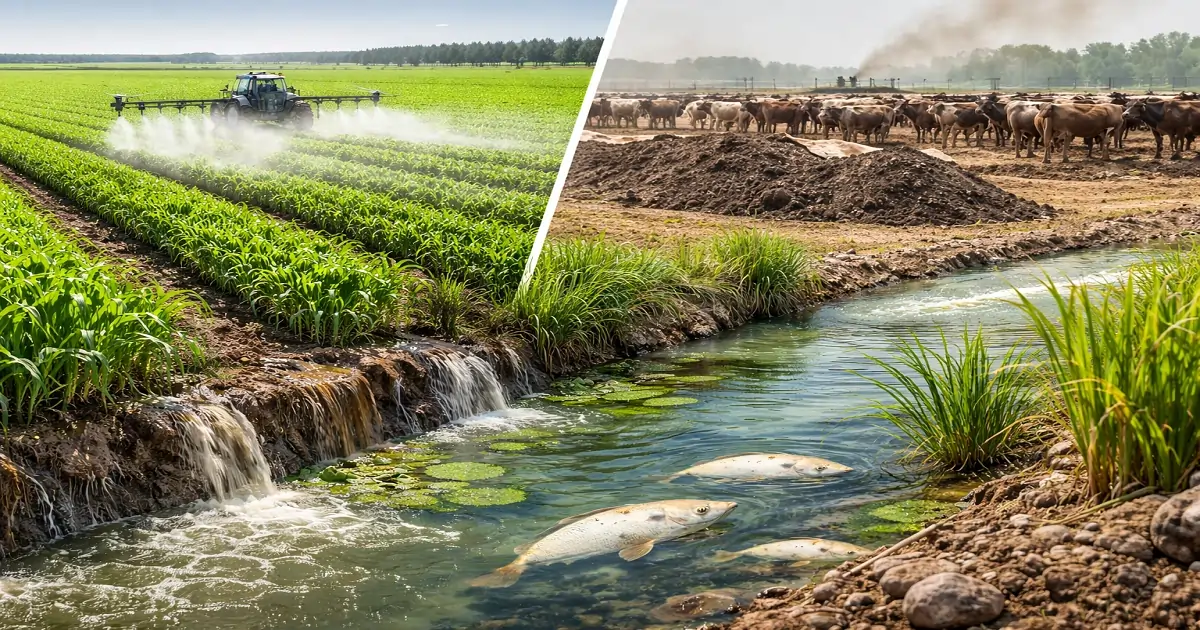
Agricultural pollution appears in several forms, depending on where contaminants accumulate. Each type affects a different part of the environment. Together, they show how farming influences natural systems beyond food production.
Agricultural pollution is one of the major pollution categories discussed under the broader classification of pollution types, causes, effects, and control measures. Understanding these types clarifies how pollution spreads and why targeted solutions matter.
The most common forms affect water, soil, and air. Each type develops through distinct pathways but often overlaps in impact.
Agricultural Water Pollution
Water contamination from farming occurs when chemicals and waste enter rivers, lakes, or groundwater. The major sources of water pollution threatening water quality today show how agricultural runoff fits into broader patterns of water contamination.
Runoff carries nutrients from fields after rainfall. As a result, water bodies receive excess nitrogen and phosphorus.
Nitrate pollution poses serious risks to drinking water sources. High nitrate levels threaten human health, especially in rural areas. Furthermore, nutrient overload triggers eutrophication in lakes and ponds.
Eutrophication reduces oxygen levels. Aquatic plants and fish struggle to survive under these conditions.
Agricultural Soil Pollution
Soil degradation develops when harmful substances accumulate in farmland. Repeated use of chemicals leaves behind pesticide residues. These residues disturb soil organisms and nutrient cycles.
Loss of soil fertility follows prolonged exposure. Beneficial microbes decline, and soil structure weakens. Land pollution causes, effects, and practical solutions explain how long-term soil contamination develops and how it can be reduced. Therefore, crops depend more on external inputs over time.
Healthy soil supports sustainable farming. Protecting it prevents long-term productivity loss.
Agricultural Air Pollution
Agricultural air pollution often receives less attention. However, it plays a major role in environmental change. Ammonia emissions from manure and fertilizers enter the atmosphere.
Greenhouse gases from agriculture include methane from livestock digestion. These gases trap heat and influence climate patterns. Furthermore, airborne particles affect respiratory health.
Reducing emissions improves both air quality and climate stability. Responsible practices help limit these invisible impacts.
Agricultural Runoff and Ecosystem Disruption
Agricultural runoff links farmland to nearby ecosystems through moving water. Rainfall and irrigation carry dissolved chemicals across fields. Therefore, substances applied on land often reach streams, lakes, and wetlands.
As agricultural runoff enters water bodies, nutrient levels rise. Excess nitrogen and phosphorus encourage rapid algae growth. These algal blooms spread across the surface and block sunlight, a process widely documented in research on nutrient pollution caused by agricultural runoff by the United States Environmental Protection Agency.
Over time, oxygen levels fall as algae decay. This process creates dead zones where fish and insects cannot survive. Besides harming aquatic life, these changes disrupt food chains. Ecosystems lose balance when runoff continues unchecked, even far from farms.
Environmental and Climate Impacts of Agricultural Pollution
Agricultural pollution affects more than individual fields or waterways. Its influence extends across ecosystems and climate systems. Pollutants alter natural cycles that plants and animals depend on.
Biodiversity loss occurs when habitats degrade. Fish, birds, and soil organisms decline as conditions worsen. Therefore, ecosystems become weaker and less resilient to change.
Climate change and agriculture are also closely linked. Methane from livestock and nitrous oxide from soils trap heat in the atmosphere. These gases intensify warming trends. Furthermore, ecosystem imbalance reduces nature’s ability to absorb carbon. As a result, environmental stress increases across regions and seasons.
How Agricultural Pollution Affects Human Health
Human health connects directly to environmental quality. When pollution spreads from farms, people often face hidden risks. Contaminated drinking water remains one of the most serious concerns.
Nitrate exposure occurs when fertilizers seep into groundwater. High nitrate levels threaten infants and vulnerable groups. Besides this, pesticide residues may enter food and water supplies.
Long-term health risks include digestive issues and weakened immunity. Air pollutants from farming can also affect breathing. Therefore, reducing pollution protects not only ecosystems but also community well-being.
How to Prevent Agricultural Pollution
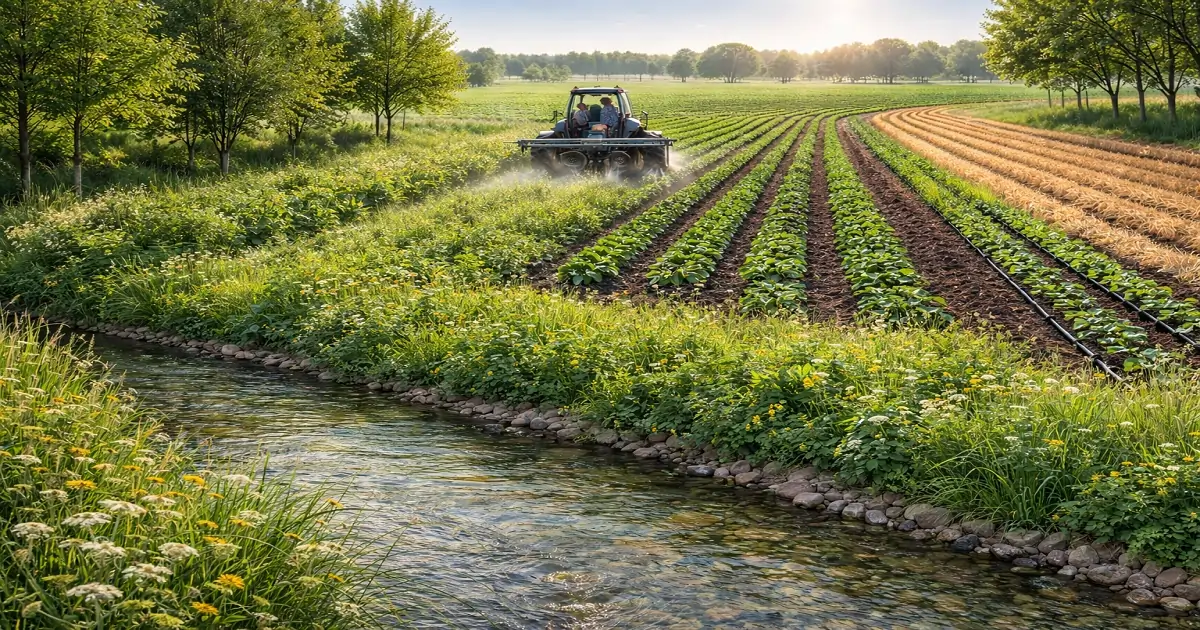
Preventing pollution requires practical changes in daily farming decisions. Many solutions already exist and can work together. These actions reduce harm while supporting production goals.
Practical Measures to Reduce Agricultural Pollution
Smarter fertilizer and pesticide application
Applying only required amounts reduces chemical loss. Timing applications also limits runoff and leaching.
Improved livestock waste management
Proper storage and treatment prevent waste from reaching soil and water. This also lowers harmful emissions.
Soil conservation and erosion control
Cover crops and reduced tillage protect soil structure. Healthy soil absorbs water and nutrients better.
Efficient irrigation techniques
Controlled watering prevents excess runoff. Drip systems help reduce water misuse in agriculture.
Buffer zones near water bodies
Vegetated areas filter pollutants before they reach streams. These zones support eco-friendly farming and pollution control in agriculture.
Together, these sustainable farming practices protect resources while maintaining long-term productivity.
Why Agriculture Is Essential—but Must Be Practiced Responsibly
Agriculture remains essential for food security, employment, and economic stability. Communities depend on farming to meet daily needs and support livelihoods. Therefore, protecting agriculture also means protecting the systems that sustain human life.
However, long-term productivity depends on how farming is practiced. Environmental stress does not come from agriculture itself, but from methods that overuse chemicals and natural resources. When these practices continue unchecked, agricultural pollution threatens soil health, water quality, and future yields.
Responsible farming offers a practical way forward. Sustainable agriculture focuses on efficient resource use, healthier soils, and cleaner water systems.
Besides that, responsible farming practices help reduce pollution while maintaining steady production. This approach supports food production and environmental balance together.
By aligning productivity with care for natural resources, agriculture can remain both effective and environmentally safe. This balance strengthens prevention efforts and supports a healthier future for farming and ecosystems alike.
Conclusion
Agricultural pollution highlights how closely food production connects with environmental health. Farming practices influence soil, water, air, and living systems. Therefore, understanding major causes such as chemical use, runoff, and waste management helps explain their wide impacts.
The effects reach beyond fields and ecosystems. Polluted water, degraded soil, and rising emissions affect communities and future food security. However, these challenges are not unavoidable.
Sustainable practices offer a clear path forward. Responsible input use, better water management, and soil protection reduce harm while supporting productivity. Addressing agricultural pollution requires shared responsibility.
By choosing balanced methods, agriculture can meet human needs and protect natural systems for future generations.