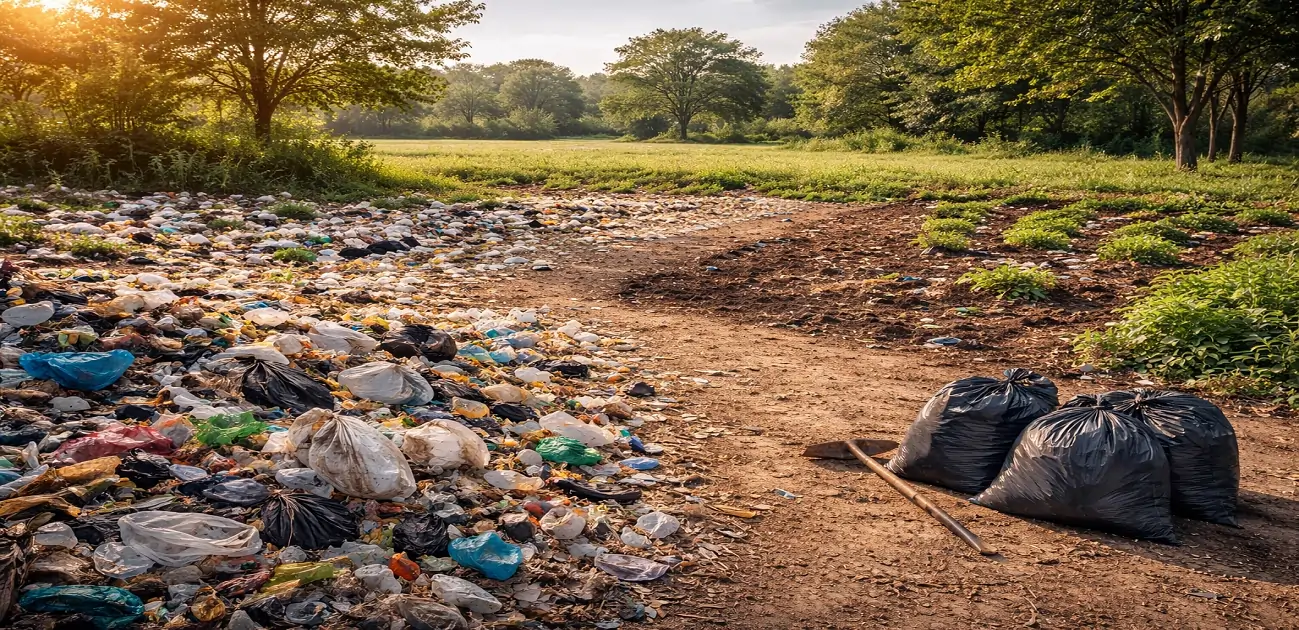
Land pollution affects the ground beneath our feet and the food we depend on. It happens when human activities and waste damage land quality over time. Across cities and rural areas, this form of environmental pollution is becoming harder to ignore. Therefore, understanding it is important for people everywhere.
Polluted land does not stay isolated. It slowly spreads problems through soil, water, and living systems. As a result, soil contamination threatens crops, wildlife, and human health. However, many people still see it as a distant issue rather than a daily concern.
This topic matters because land supports homes, farming, and natural ecosystems. Besides that, land degradation often builds silently before visible damage appears. This post explains what causes land pollution, how it affects life and nature, and which practical solutions can reduce its impact over time.
What Is Land Pollution?
Land pollution refers to the gradual damage of land caused by human actions. It occurs when waste, chemicals, or unwanted materials build up on the ground. Unlike air or water pollution, this problem stays hidden longer. However, its effects often last much longer.
This issue mainly comes from land contamination linked to daily activities. Waste accumulation from homes, farms, and cities slowly changes soil structure. As a result, soil quality degradation reduces the land’s ability to support plants and life. Therefore, even fertile areas can become unproductive over time.
Land pollution is different because it directly affects where people live and grow food. Besides that, it often starts silently through careless habits. Understanding this concept helps explain why protecting land is as important as protecting air and water.
Major Causes of Land Pollution
Land pollution does not appear suddenly. It develops through repeated actions that seem harmless at first. Over time, these actions combine and create serious damage. Understanding the causes of land pollution helps identify where change is possible.
Improper Waste Disposal
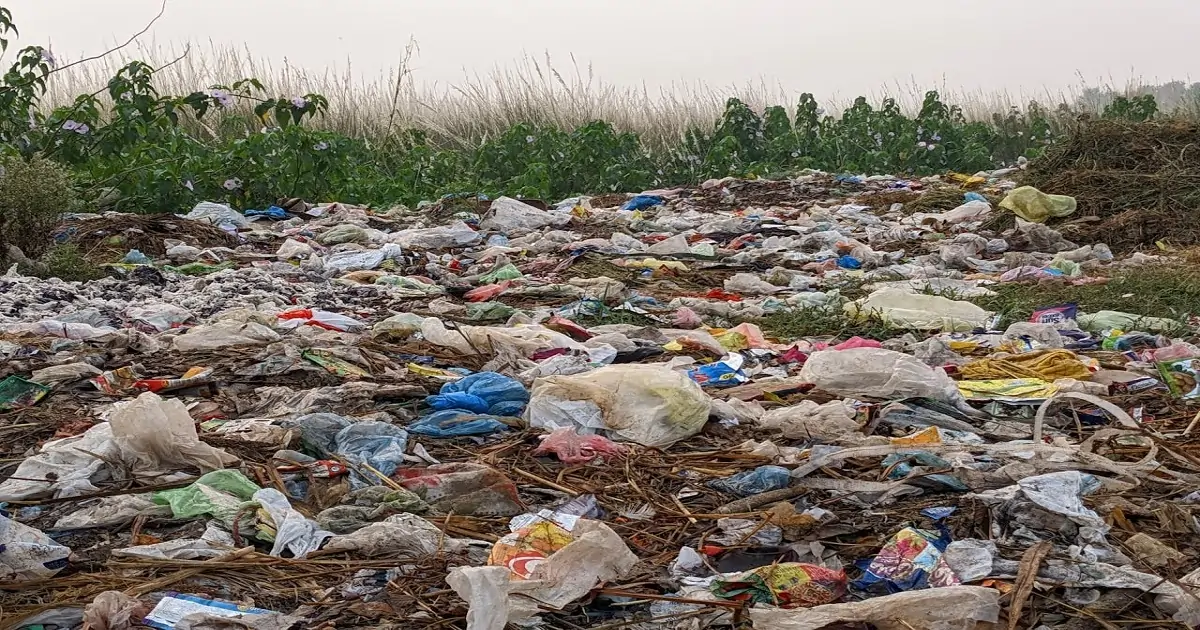
Improper waste disposal remains one of the leading land pollution sources. Garbage dumped on open land slowly breaks down. However, many materials release harmful substances during this process. Plastics, electronics, and household waste often stay in soil for years.
Besides that, unmanaged landfills leak pollutants into nearby areas. As waste piles grow, surrounding land loses its natural balance. Therefore, careless disposal practices affect much more than one location.
Industrial and Urban Activities
Industrial growth also contributes heavily to land pollution. Factories generate solid waste that often ends up on land. Urban expansion adds pressure through construction debris and abandoned materials. As cities spread, natural land cover continues to shrink.
Furthermore, busy urban areas produce constant waste. Without proper handling, this waste settles into nearby soil. Over time, land becomes less stable and harder to restore.
Agricultural Chemicals and Practices
Modern farming relies on fertilizers and pesticides. Agricultural pollution caused by farming activities explains how these practices damage soil, water, and surrounding ecosystems. While helpful for crops, excess chemicals remain in soil. As a result, land pollution increases through repeated use.
Besides that, poor farming practices strip nutrients from the ground. Over time, soil health declines and land productivity drops sharply.
How Land Pollution Affects the Environment and Human Health
Land pollution affects more than just the surface. Its impact spreads through ecosystems and communities. The effects of environmental pollution on human health, ecosystems, and climate show how land contamination connects with wider environmental damage beyond soil alone.
To understand these broader patterns more clearly, it helps to view land pollution as part of the wider types of pollution.
Environmental Impacts of Land Pollution
The environmental impact of land pollution appears gradually. Polluted soil loses its ability to support plant growth. As vegetation declines, animals lose shelter and food sources. Therefore, ecosystems weaken step by step.
Land pollution also affects nearby water systems. Rainwater carries contaminants from soil into rivers and lakes. Besides that, natural nutrient cycles become disturbed. Over time, once-stable environments struggle to recover.
Health Risks Linked to Land Pollution
The effects of land pollution also reach human health. Polluted soil can contaminate food crops. As a result, harmful substances enter the food chain. Long-term exposure increases health risks.
Furthermore, people living near polluted land often face breathing and skin problems. Children and older adults remain more vulnerable. Therefore, land pollution becomes a public health concern, not just an environmental issue.
Common Examples of Land Pollution in Daily Life
Land pollution examples often appear in places people see every day. Many of these activities seem normal. However, their combined impact slowly damages the land. Everyday land pollution grows when waste handling habits remain careless.
Household and Urban Waste
Household waste is a major contributor to land pollution. Discarded food scraps, broken items, and packaging often end up on open land. Besides that, construction debris from cities piles up near roads and empty plots. Over time, this waste changes soil structure and blocks natural drainage.
Urban areas produce waste faster than disposal systems can manage. Therefore, uncollected garbage spreads into nearby land. This pattern is common in growing towns and cities.
Plastic and Non-Biodegradable Materials
Plastic is one of the most visible land pollution examples. Bags, bottles, and wrappers remain in soil for decades. Furthermore, non-biodegradable materials break into smaller pieces but never fully disappear. These fragments reduce soil quality and harm animals.
Agricultural pollution also fits daily life examples. Excess fertilizers and discarded farm materials stay on land. As a result, soil health declines quietly over time.
Practical Solutions to Reduce Land Pollution
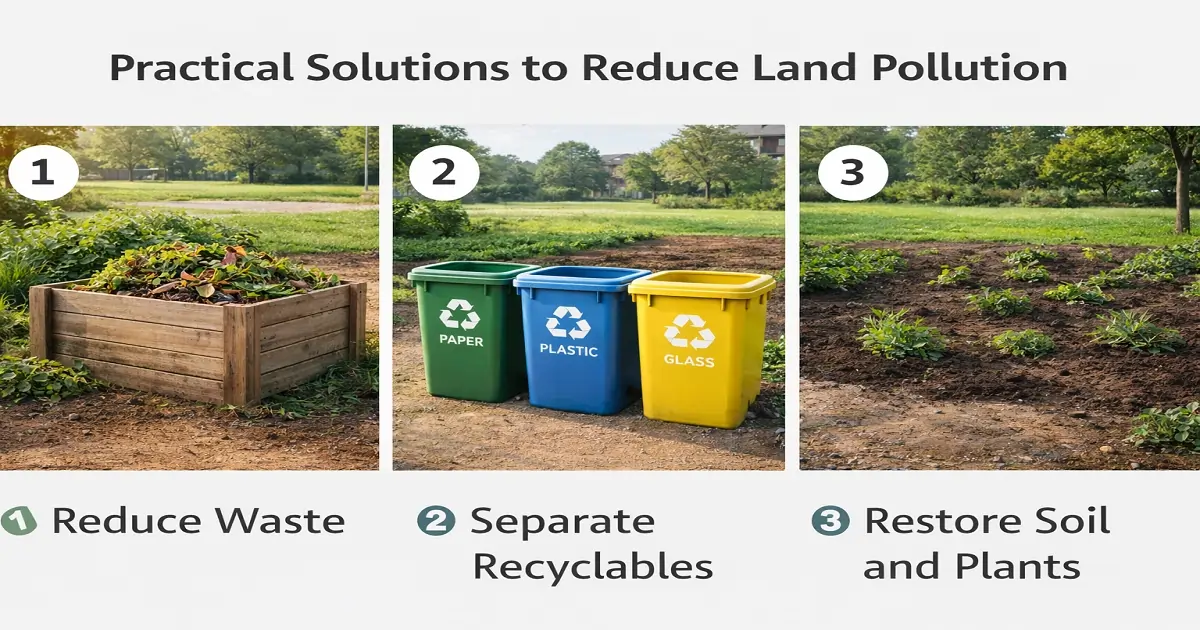
Reducing land pollution requires action at different levels. Small changes, when repeated daily, create meaningful impact. Therefore, practical solutions to land pollution focus on habits and systems.
What Individuals Can Do
- Reduce waste generation by choosing reusable products.
- Separate waste at home to support recycling.
- Dispose household garbage responsibly instead of dumping it.
- Avoid single-use plastics whenever possible.
- Support eco-friendly farming and local produce.
These actions help limit land pollution control measures at the source. Besides that, they encourage mindful consumption.
Community and Policy-Level Solutions
- Improve waste collection and landfill management.
- Promote recycling programs in neighborhoods.
- Regulate industrial waste disposal strictly.
- Encourage sustainable farming practices.
- Restore polluted land through clean-up projects.
Furthermore, strong policies help communities protect land more effectively.
Why Controlling Land Pollution Matters for the Future
Land supports food production, housing, and natural ecosystems. When land pollution increases, these systems weaken. Therefore, controlling this problem protects long-term survival.
Sustainable land use ensures soil remains fertile for future generations. Besides that, healthy land supports ecosystem balance and biodiversity. Plants, animals, and humans all depend on stable ground conditions.
Environmental protection begins with caring for land. Furthermore, preventing damage costs less than repairing polluted areas later. When societies act early, recovery becomes easier. This long-term view highlights why land pollution control matters beyond immediate benefits.
Conclusion
Land pollution develops through everyday actions that often go unnoticed. Waste disposal habits, plastic use, and farming practices all contribute to the problem. Over time, these causes affect soil, ecosystems, and human health.
However, practical solutions exist at personal and community levels. Responsible waste handling, reduced plastic use, and better policies can limit damage. Besides that, awareness encourages smarter choices.
Addressing land pollution protects food sources, environments, and future generations. When people understand their role, positive change becomes possible through consistent effort and shared responsibility.