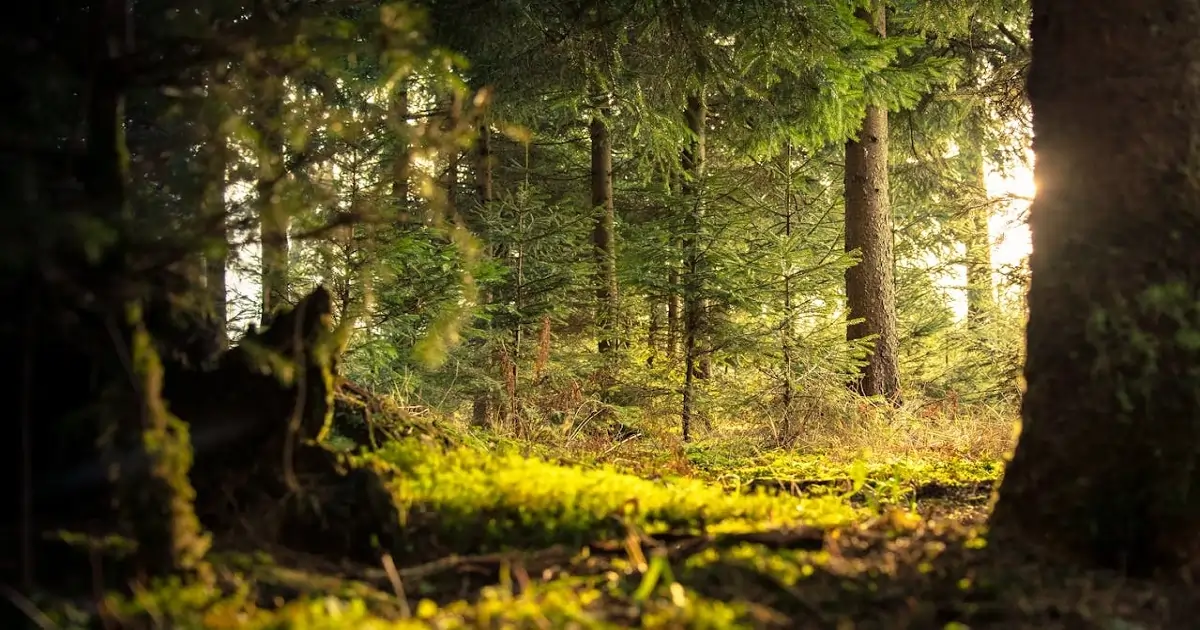
Forests quietly support life across the planet in ways many people overlook. They are not just green spaces or sources of timber. Instead, they act as living systems that connect air, water, soil, plants, animals, and people.
When we understand forests and their importance, we begin to see how deeply they shape daily life. Every breath we take and every drop of clean water we use is linked, directly or indirectly, to healthy forests.
Forest ecosystems help regulate climate, store carbon, and maintain the natural balance that keeps environments stable. In addition, forests support countless species and protect landscapes from long-term ecological degradation.
Life on Earth has evolved alongside forests for millions of years. However, growing human pressure is changing these systems faster than ever. Therefore, learning about forests and their role in sustaining life is essential for a resilient future.
What Are Forests?
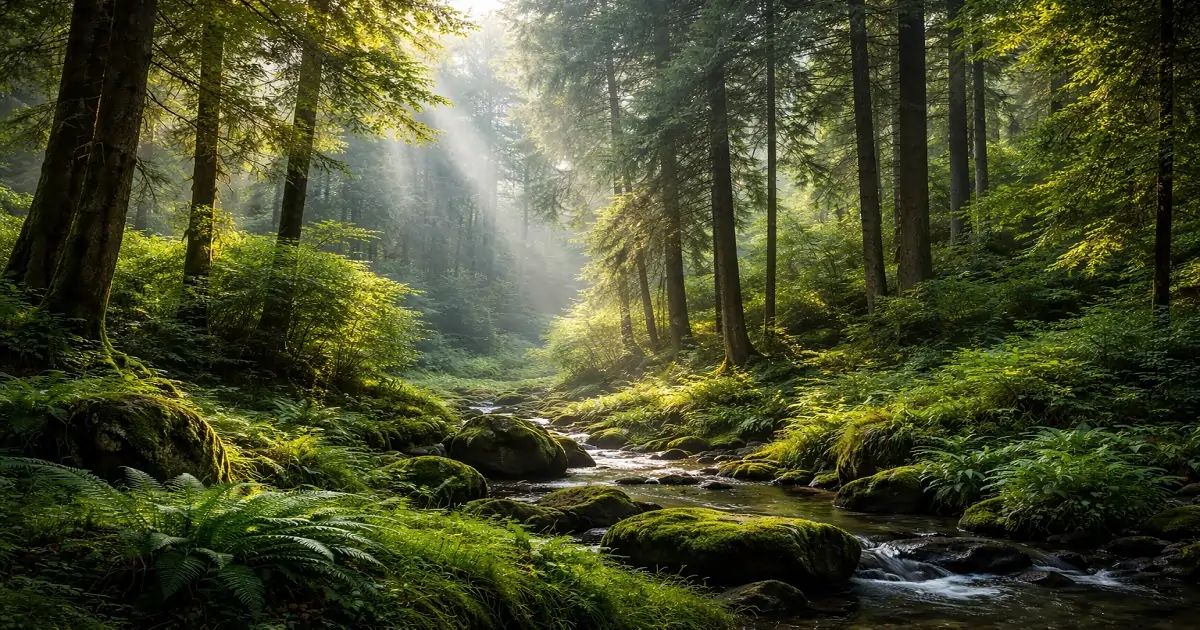
Forests are natural areas where trees grow closely together and form a living community. They include plants, animals, soil organisms, and microorganisms that depend on one another. Because of this, forests function as complete ecological systems rather than simple groups of trees.
A typical forest has layers. Tall trees form the canopy, while shrubs and grasses grow below. This structure supports many life forms at the same time. As a result, forest ecosystems are rich in biodiversity and remain stable over long periods.
Forests also play a key role in climate regulation. Tree cover helps control temperature, store carbon, and influence rainfall patterns. Besides this, forests protect soil and support the water cycle, which benefits nearby regions.
Forests differ from other ecosystems such as grasslands or deserts. Grasslands have limited tree cover, while deserts lack consistent vegetation.
Woodlands may have scattered trees, but forests have denser natural vegetation and more complex interactions. Therefore, forests stand out as some of the most productive ecological systems on Earth.
Types of Forests
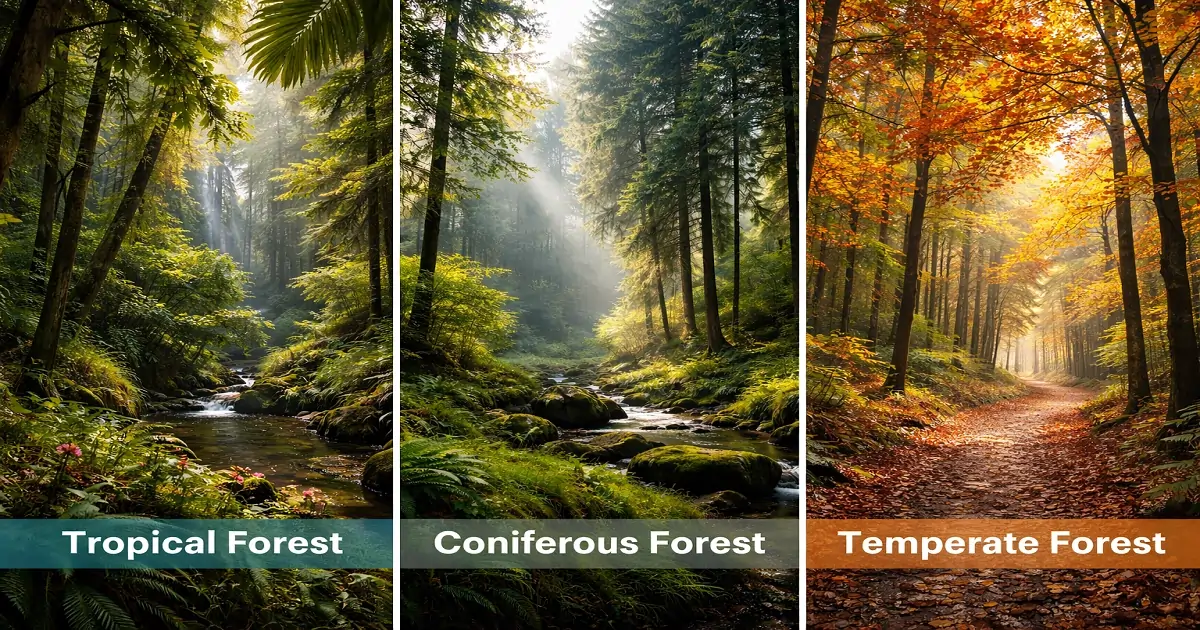
Forests develop in different forms based on climate, rainfall, and location. Each forest type supports life in a unique way. Understanding these types helps explain how forests adapt to their surroundings. This section provides an overview rather than detailed explanations.
Tropical Forests
Tropical forests grow in warm regions with high rainfall throughout the year. These forests are known for dense tree cover and exceptional biodiversity. Many plant and animal species found here depend on constant moisture and stable temperatures.
In India, tropical forests appear as evergreen and deciduous types. Their features, distribution, and seasonal patterns are explained in detail in guides on tropical rainforests, tropical deciduous forests, and distinctions between tropical evergreen and deciduous forests.
In tropical regions, forests also differ based on seasonal rainfall patterns. Some remain green throughout the year, while others shed leaves during dry months. These differences are explained further in a guide on tropical evergreen and deciduous forest distinctions.
Temperate and Boreal Forests
Temperate forests grow in regions with moderate climates and clear seasonal changes. Trees often shed leaves during colder months to conserve energy. These forests support animals adapted to seasonal food availability.
Boreal forests, also known as taiga, grow in colder zones. They are dominated by hardy coniferous trees that tolerate snow and low temperatures. Together, these forests help regulate global climate and store carbon.
Coniferous Forests
Coniferous forests are dominated by needle-leaved trees such as pine and fir. These trees reduce water loss and survive harsh climates. Such forests are common in mountainous and cold regions.
In India, coniferous forests are mainly found in the Himalayas. Their distribution, climate adaptation, and ecological importance are discussed in detail in the article on coniferous forests in India.
Special and Regional Forest Types
Some forests grow under unique environmental conditions shaped by geography, climate, and water availability. Mangrove forests thrive along coastlines and protect shores from erosion by stabilizing sediments and reducing wave impact.
Montane forests develop at higher elevations, where cooler temperatures and varied terrain support distinct plant and animal communities.
In India, mangrove ecosystems form extensive coastal forests that support fisheries, protect shorelines, and reduce storm damage. One such example is India’s largest mangrove forest by area, which illustrates how mangroves support both biodiversity and coastal livelihoods.
Beyond mangroves, forest cover varies widely across Indian states, with some regions holding the largest forest by area in India due to differences in climate, terrain, and vegetation patterns.
Beyond these, several regional forest types occur under specific climatic conditions. Dry forests grow in areas with low or seasonal rainfall, where trees adapt by shedding leaves or developing deep root systems to conserve water.
Thorn forests are found in arid and semi-arid regions and are characterized by scattered trees and thorny shrubs adapted to extreme heat and limited moisture.
Riverine forests, located along riverbanks and floodplains, benefit from regular water flow and nutrient-rich soils, making them important for stabilizing river ecosystems and supporting diverse plant and animal life.
Although these forests may cover smaller areas than major forest types, they provide critical ecological services. They protect land, support wildlife, regulate water systems, and contribute to the livelihoods of nearby communities.
Importance of Forests for Life on Earth
Forests support life in ways that go beyond what we see on the surface. They work quietly in the background, maintaining conditions that allow humans, animals, and plants to survive.
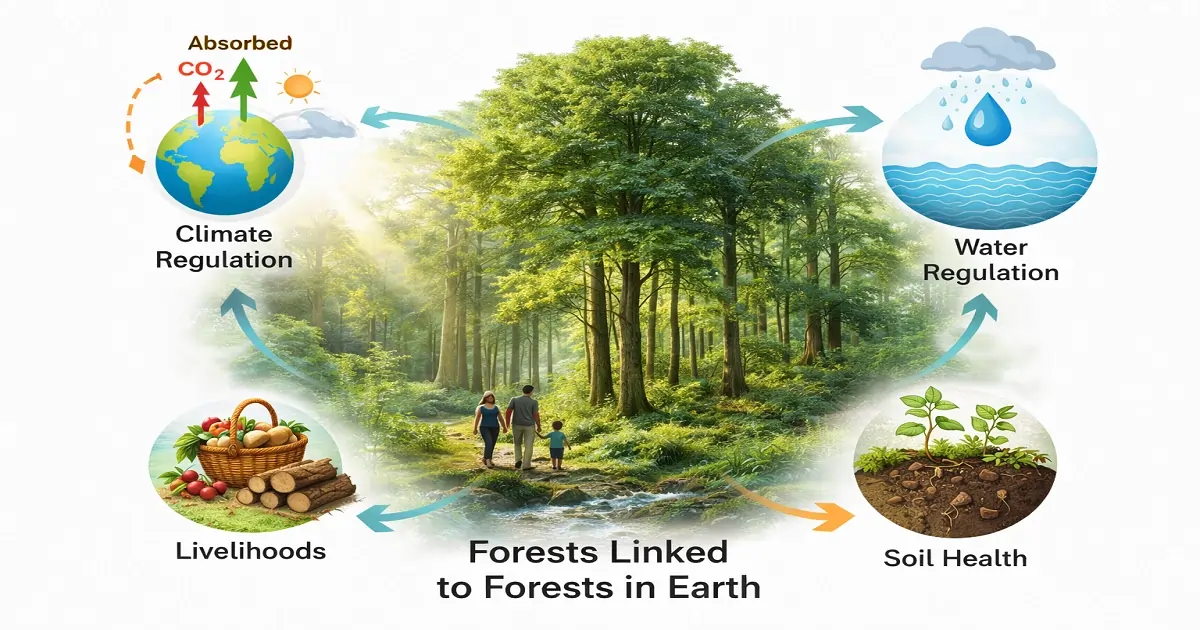
When we understand the importance of forests, we also understand why protecting them matters for present and future generations.
Forests provide essential ecosystem services that keep natural systems stable and support climate and ecological balance. They support climate balance, supply natural resources, and help communities sustain their way of life.
Therefore, forests are not optional features of the planet. They are foundations of life on Earth.
Environmental Importance
Forests play a major role in regulating the global climate. Trees absorb carbon dioxide from the air and store it in their trunks, roots, and soil. This process slows the buildup of greenhouse gases and reduces temperature rise.
Besides this, forests release oxygen through photosynthesis, which supports life across ecosystems. They also help control local weather by influencing rainfall and humidity. As a result, areas near forests often experience more stable climates.
Forests protect land from erosion and reduce the impact of floods. Their roots hold soil together, while fallen leaves enrich the ground. This process explains how forests protect soil from erosion and stabilize land over time. Therefore, forests maintain environmental balance and support healthy ecosystems.
Economic and Social Importance
Millions of people depend on forests for daily needs and income. Forests provide timber, fruits, medicinal plants, and fuel. These resources support sustainable livelihoods, especially in rural areas.
Besides this, forests support agriculture by protecting water sources and soil fertility. Farmers near forested regions often benefit from improved crop conditions. Indigenous communities, in particular, rely on forests for food, shelter, and cultural practices.
When forests are managed responsibly, they continue to support economies without losing their ecological value. Therefore, forests link environmental health with human well-being.
Forest Resources and Their Importance in Daily Life
Forests support everyday human life through a wide range of natural resources that go far beyond ecological services. These resources contribute directly to housing, food security, healthcare, employment, and local economies. Many daily necessities originate from forests, often without people realizing their source.
Forest resources are generally renewable when managed responsibly. However, their availability depends on healthy forest ecosystems and sustainable use. Understanding these resources highlights how closely human well-being is connected to forest conservation.
Timber, Fuel, and Construction Materials
Timber is one of the most widely used forest resources. Wood from forests is used to build homes, furniture, tools, and infrastructure. In many regions, especially rural areas, timber remains a primary construction material because it is accessible, versatile, and renewable when harvested sustainably.
Forests also provide fuelwood, which is a major source of energy for cooking and heating in many parts of the world. Charcoal and firewood remain essential for households that lack access to modern energy sources.
Besides this, forest products such as bamboo, resin, and fibers are used in construction, crafts, and small industries.
When forests are managed responsibly, these materials can meet human needs without exhausting natural systems. Therefore, sustainable harvesting plays a critical role in balancing resource use and forest health.
Food, Medicines, and Non-Timber Forest Products
Forests are important sources of food and nutrition. They provide fruits, nuts, seeds, honey, mushrooms, and edible leaves that supplement diets, especially for forest-dependent communities. These foods contribute to nutrition security and dietary diversity.
Medicinal plants are another vital forest resource. Many traditional and modern medicines are derived from forest plants. Indigenous knowledge systems rely heavily on forest biodiversity for healthcare, and pharmaceutical research continues to benefit from forest-based compounds.
In addition to food and medicine, forests supply non-timber forest products such as gums, latex, oils, spices, and natural dyes, which are widely recognized for their role in supporting food security, healthcare, and rural incomes worldwide.
These products support small-scale industries and household incomes without requiring tree removal. As a result, non-timber resources offer economic benefits while preserving forest structure.
Forests in Rural Livelihoods and Local Economies
For millions of people, forests are a direct source of livelihood. Rural and indigenous communities depend on forests for employment, food, shelter, and cultural practices. Activities such as collection of forest produce, handicrafts, beekeeping, and eco-tourism generate income while maintaining close ties with nature.
Forests also support local economies indirectly. They protect water sources used for agriculture, reduce soil erosion, and improve environmental conditions that sustain farming and fisheries. Healthy forests therefore contribute to long-term economic stability in surrounding regions.
When communities are involved in forest management, resource use becomes more balanced and sustainable. This connection between forests and livelihoods shows that economic development and forest conservation are not opposing goals but closely linked.
Role of Forests in Sustaining Life
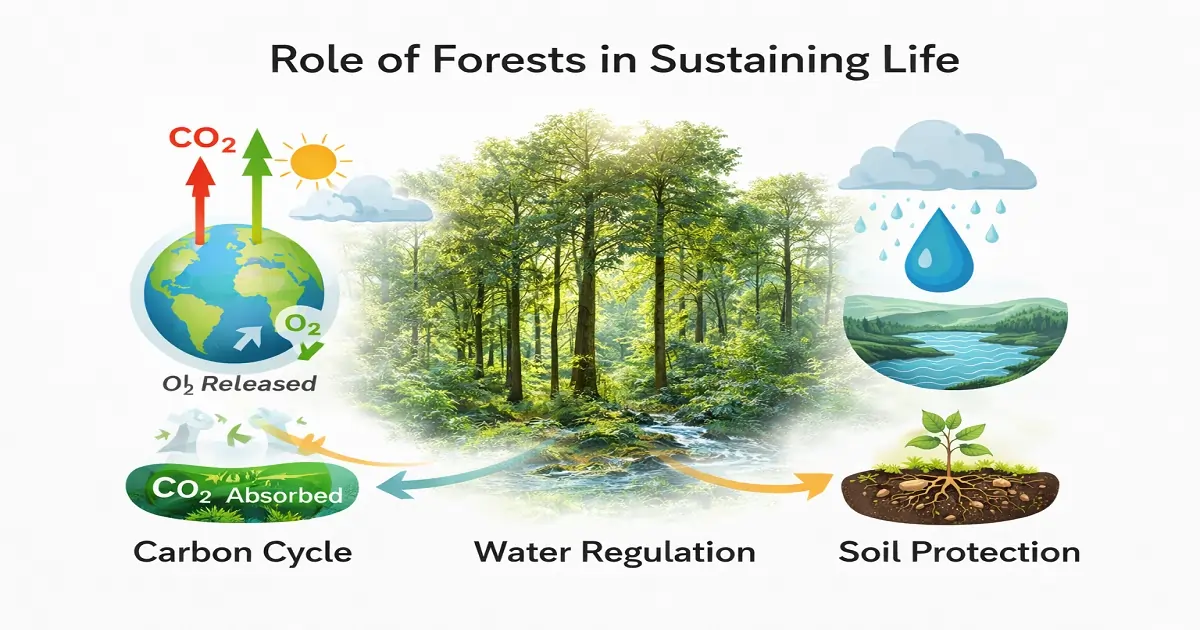
Forests do more than exist alongside life. They actively sustain it through continuous natural processes. These life-support systems operate every day, often without notice.
Role in Climate Regulation (Global)
Forests play a critical role in regulating the Earth’s climate at a global scale. Through photosynthesis, trees absorb carbon dioxide from the atmosphere and store it in their biomass and surrounding soil.
This long-term carbon storage helps slow the accumulation of greenhouse gases and reduces the pace of global warming.
When forests remain intact, they moderate rising temperatures and reduce the frequency of extreme climate events over long periods. Therefore, forests are essential for maintaining planetary climate stability and supporting life across regions far beyond their immediate boundaries.
Role in the Water Cycle
Forests play a vital role in water regulation. Tree roots absorb rainwater and release it slowly into the soil. This process reduces floods and maintains groundwater levels.
Forest canopies soften rainfall impact. As a result, water reaches the ground gently and feeds rivers and streams throughout the year.
Role in Soil Health and Nutrient Cycling
Forests improve soil health through natural recycling. Leaves, branches, and organic matter break down and return nutrients to the soil. Microorganisms support this process.
Roots also prevent soil loss by holding land together. Therefore, forests protect landscapes from erosion and degradation.
Role in Supporting Biodiversity and Food Webs
Forests provide habitats for countless species. Plants, animals, insects, and microbes depend on forest food webs to survive. Each species plays a role in maintaining balance.
High biodiversity strengthens ecosystems. It allows forests to recover from stress and continue supporting life.
Role of Forests in Ecosystem Balance
Ecosystem balance depends on healthy interactions between living and non-living elements. Forests help maintain this balance by linking climate, soil, water, and air systems.
Role in Climate Regulation (Local & Regional)
At local and regional levels, forests influence climate by regulating temperature, humidity, and airflow. Tree canopies provide shade, reducing surface temperatures and protecting ecosystems from excessive heat. Through transpiration, forests release moisture into the atmosphere, which helps cool surrounding areas and supports local rainfall patterns.
Forests also buffer ecosystems against climate extremes such as heatwaves and dry spells. Areas with healthy forest cover often experience more stable microclimates compared to deforested regions, a relationship widely documented in research on microclimate regulation by forests. As a result, forests help maintain ecological balance and create favorable conditions for agriculture, wildlife, and human settlements.
Role in Soil Conservation and Water Cycle
Forest roots bind soil particles together and reduce erosion. This protection is especially important in hilly and sloped areas.
Besides this, forests support the water cycle by regulating runoff and groundwater recharge. Healthy forests ensure steady water availability for ecosystems and people.
Role in Air and Water Purification
Forests help clean the air by trapping dust and pollutants on leaves. Trees also absorb harmful gases and improve air quality.
Water flowing through forested land is filtered naturally. Soil and plant roots remove impurities, resulting in cleaner water. Therefore, forests support both environmental and human health.
Forests and Biodiversity
Forests are among the richest ecosystems on the planet. They act as biodiversity hotspots that support a wide range of life forms. From tiny insects to large mammals, many species depend entirely on forest environments.

Forest biodiversity exists because of strong connections between species. Plants provide food and shelter. Animals help with pollination and seed dispersal. Microorganisms recycle nutrients in the soil. Therefore, each group supports the survival of others.
In India, tropical deciduous forests support seasonal wildlife patterns and rural livelihoods, especially in monsoon-dependent regions.
Forests also protect wildlife habitats from harsh conditions. Dense tree cover regulates temperature and moisture. As a result, species can thrive even during seasonal changes.
Large forest regions clearly show this richness. For example, the Amazon Forest demonstrates how forests support exceptional species diversity. It is frequently cited at the global level because of its vast scale, exceptional species density, and its significant role in storing carbon and regulating the Earth’s climate.
Its size and biodiversity explain why forests are vital for maintaining flora and fauna.
When forests remain healthy, species richness stays high. However, when forests are disturbed, biodiversity declines quickly. This shows how closely life depends on stable forest ecosystems.
Threats to Forest Ecosystems
Despite their value, forests face growing pressure worldwide. Human activities and environmental changes are altering forest ecosystems faster than natural recovery allows.
Deforestation and Land-Use Change
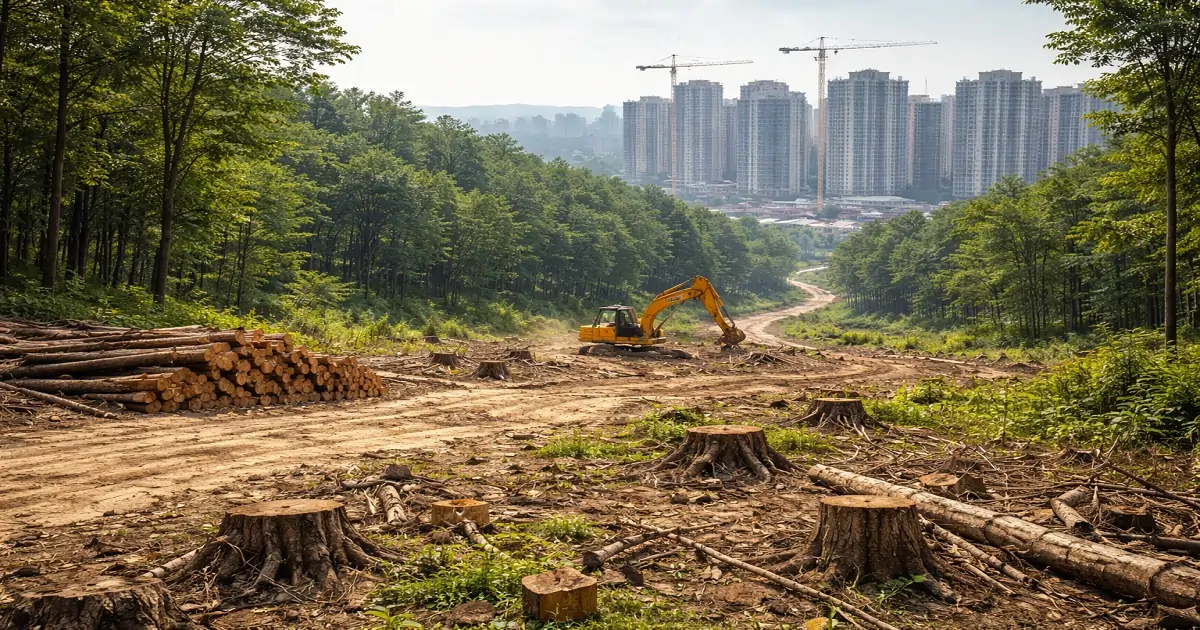
Deforestation occurs when forests are cleared for farming, settlements, or infrastructure. This process removes tree cover and fragments wildlife habitats. As a result, forest loss reduces ecosystem stability.
Land-use change often breaks large forests into smaller patches. Therefore, animals lose migration routes and access to food. Over time, these changes weaken forest ecosystems.
Climate Change and Forest Degradation
Climate change affects forests through rising temperatures and shifting rainfall patterns. Droughts, storms, and wildfires damage trees and soil. These events reduce forest resilience.
Besides this, climate stress makes forests more vulnerable to pests and disease. Together, these factors increase forest degradation across regions.
Urbanization and Infrastructure Expansion
Urbanization reduces forest cover as cities expand into natural areas. Roads, housing, and industrial projects often replace forests permanently. This expansion fragments wildlife habitats and disrupts ecological connections.
Besides this, increased pollution and resource demand place additional stress on nearby forests. Over time, urban growth weakens forest ecosystems and limits their ability to recover naturally.
Why Forest Conservation Matters Today
Forest conservation focuses on protecting forests while allowing responsible use. It ensures forests continue supporting people and nature over time. Understanding forests and their importance helps shape better conservation decisions.
Sustainable Forest Management
Sustainable forest management balances the use of forest resources with the natural ability of forests to regenerate. Practices such as selective logging, controlled harvesting, and reforestation help maintain forest structure, biodiversity, and productivity over time.
As a result, forests can continue providing essential resources without suffering permanent ecological damage. These principles form the foundation of modern forest conservation approaches discussed in greater detail in focused conservation studies.
Role of Communities and Policies
Local communities play a key role in forest protection through traditional knowledge and responsible resource use developed over generations. Community involvement often improves monitoring, reduces overexploitation, and supports long-term sustainability.
Alongside this, strong policies, effective governance, and fair enforcement help control illegal activities and promote responsible forest management. Together, community participation and policy frameworks create a balanced approach to conservation that protects forests while meeting human needs.
Key Functions of Forests
Forests perform several essential functions that support environmental stability and human well-being. Together, these functions regulate natural systems, protect biodiversity, and sustain livelihoods across different regions.
Understanding these core functions helps explain why forests are fundamental to balanced ecosystems.
- Forests stabilize climate by storing carbon and reducing temperature extremes.
- Forests conserve biodiversity by protecting wildlife habitats.
- Forests regulate water by supporting rainfall and groundwater recharge.
- Forests protect soil by preventing erosion and nutrient loss.
- Forests support livelihoods through food, fuel, and natural resources.
These functions show why forests remain essential for balanced ecosystems.
Conclusion
Forests support life through complex and continuous natural processes that operate at local, regional, and global scales. They regulate climate, protect biodiversity, maintain water cycles, and preserve soil health, making them essential to the stability of ecosystems across the planet.
Their importance lies not only in the resources they provide but also in the invisible ecological functions they perform every day.
When we understand forests and their importance, we begin to recognize them as natural life-support systems rather than isolated landscapes. Forests connect air, water, soil, plants, animals, and people into an interdependent network that sustains environmental balance.
Healthy forests reduce climate risks, support livelihoods, and create conditions necessary for long-term resilience.
Protecting and managing forests responsibly is therefore not optional. It is a shared responsibility that directly influences the future of life on Earth. Maintaining healthy forest ecosystems ensures a more stable, resilient, and sustainable environment for present and future generations.