A biosphere reserve is a protected area where nature conservation and human life exist in balance. In simple terms, the biosphere reserve definition refers to regions designed to protect plants, animals, and ecosystems while allowing sustainable human activities. These areas support ecological stability without separating people from their natural surroundings.
Today, rapid urban growth, climate change, and habitat loss place increasing pressure on ecosystems. Therefore, conservation approaches must go beyond strict protection alone. Biosphere reserves address this need by combining environmental care with research, education, and responsible resource use.
As a result, biosphere reserves form an important part of long-term wildlife conservation strategies, showing how biodiversity protection and human development can progress together for lasting environmental health.
What Is a Biosphere Reserve? Clear Definition Explained
A biosphere reserve explains how conservation can work alongside human life. It is defined as a protected area designed to conserve ecosystems while supporting sustainable use of natural resources. This definition highlights balance rather than separation between people and nature.
The concept focuses on protecting natural systems without stopping responsible human activity. Therefore, a biosphere reserve serves both as a conservation space and a learning area. It helps test practical solutions that reduce environmental damage while supporting ecological stability.
This approach makes biosphere reserves adaptable to real world challenges. It also shows how conservation can remain effective when human needs and environmental protection progress together.
Simple Definition of a Biosphere Reserve
A biosphere reserve is a specially designated area created to protect nature while supporting responsible human activities. The biosphere reserve definition describes regions where ecosystems, plants, and animals are conserved alongside sustainable use of natural resources. These areas encourage harmony between people and the environment rather than complete isolation of nature.
A biosphere reserve functions as a living space where conservation, learning, and development coexist. It supports scientific study, environmental education, and long term ecological balance. At the same time, it allows communities to continue traditional and sustainable practices without damaging natural systems.
In simple terms, a biosphere reserve is designed to protect biodiversity while promoting a balanced relationship between humans and nature. This approach answers common questions about how conservation can work alongside daily human life.
Why Biosphere Reserves Were Conceptualized
Biosphere reserves were conceptualized when conservation alone was no longer enough to protect ecosystems. As populations expanded, human activities increasingly affected forests, wetlands, and wildlife habitats. Therefore, conservation approaches had to evolve to address environmental protection and human needs together.
Traditional protected areas often restricted human involvement. However, this approach sometimes created tension with local communities that depended on natural resources.
Biosphere reserves introduced a different model where people actively participate in conservation rather than being excluded from it. This balance helps support livelihoods while easing pressure on natural systems.
Biosphere reserves were designed as practical spaces to test ways of living in harmony with nature. Their purpose is to show how conservation, scientific research, and sustainable development can progress together under real-world conditions, creating solutions that work for both ecosystems and people.
Zones of a Biosphere Reserve and Their Functions
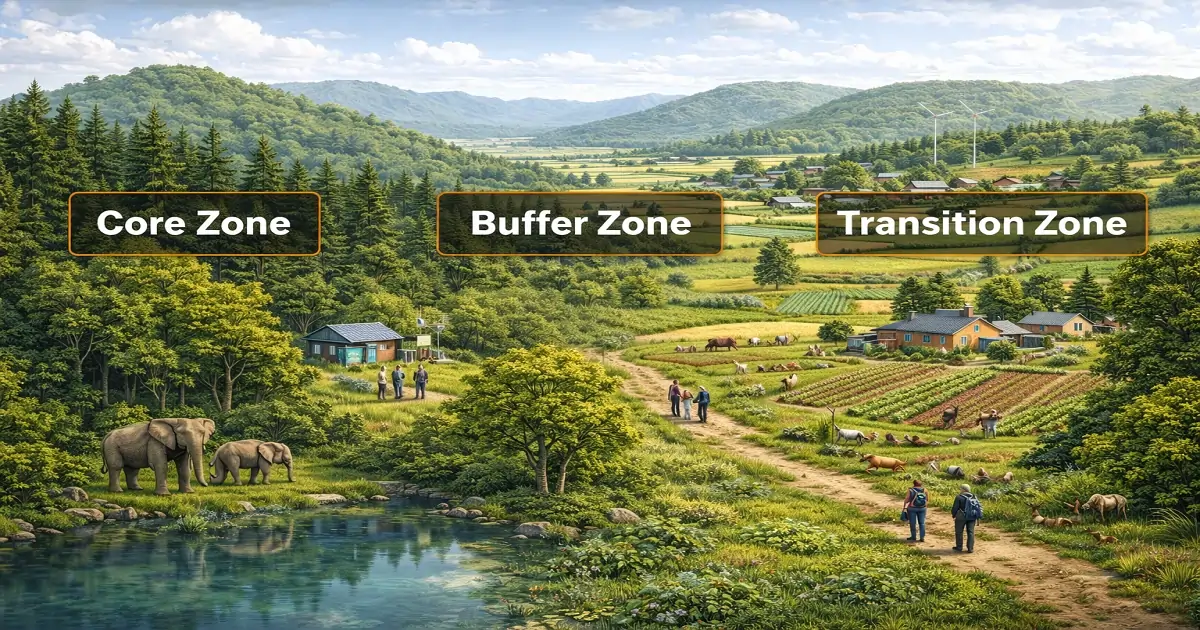
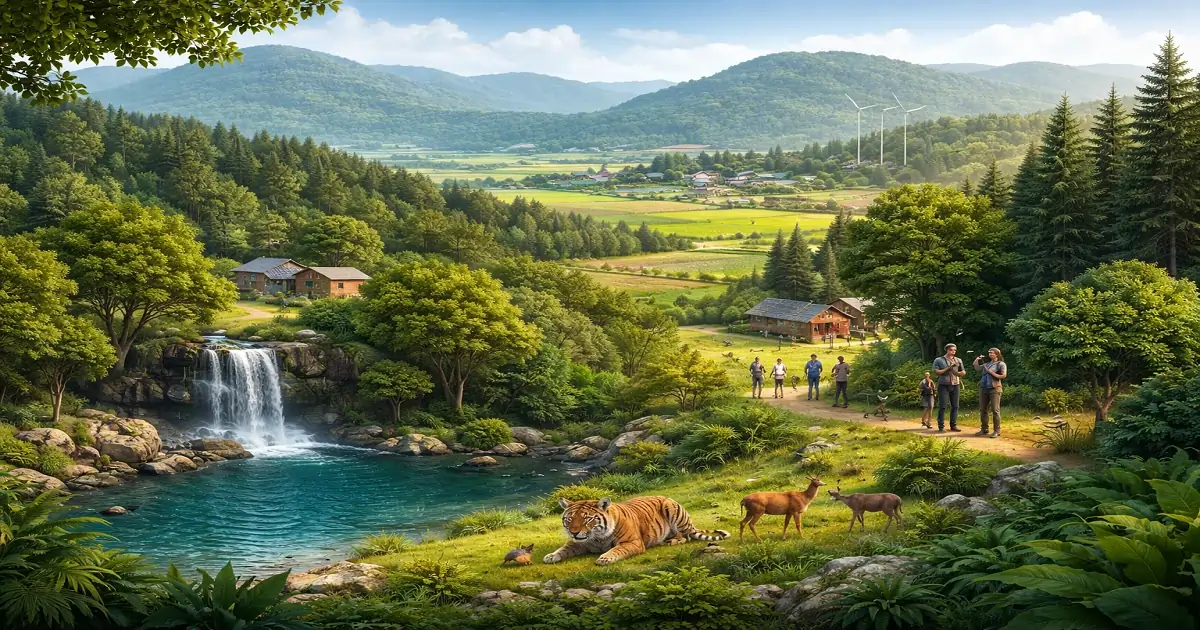
Biosphere reserves are divided into three distinct zones to manage conservation and human activity effectively. Each zone has a specific role, ensuring protection of ecosystems while supporting sustainable use.
Together, these zones of a biosphere reserve create a structured system that balances environmental care with human involvement.
The zoning approach helps reduce conflicts between conservation goals and daily human needs. It also allows scientists, communities, and planners to work within clearly defined boundaries. As a result, ecosystems receive protection without cutting off social and economic activities completely.
Core Zone – Strict Protection of Ecosystems
The core zone is the most protected part of a biosphere reserve. It focuses entirely on conserving natural ecosystems, wildlife, and plant species. Human activities are strictly limited to prevent disturbance and habitat damage.
This zone serves as a reference area for scientific research and ecological monitoring. Researchers study natural processes here to understand how ecosystems function without human interference. Therefore, the core zone plays a key role in maintaining ecological stability and biodiversity.
Buffer Zone – Regulated Human and Research Activities
Surrounding the core zone, the buffer zone allows controlled human activities that support conservation goals. Research, education, and eco friendly tourism often take place in this area. These activities help generate knowledge while minimizing harm to the environment.
The buffer zone also reduces pressure on the core zone by acting as a protective layer. Sustainable practices are encouraged, ensuring that human involvement supports, rather than threatens, nearby ecosystems. As a result, conservation efforts remain effective and balanced.
Transition Zone – Sustainable Living and Development
The transition zone is the outermost area of a biosphere reserve. It supports human settlements, agriculture, and other economic activities carried out in sustainable ways. People live and work here while respecting environmental limits.
This zone promotes cooperation between local communities, conservation authorities, and development planners. Furthermore, it demonstrates how sustainable living can protect ecosystems over time. By integrating people into conservation planning, the transition zone helps ensure long term environmental and social stability.
Purpose of a Biosphere Reserve in Modern Conservation
The purpose of a biosphere reserve is to create a balanced approach to conservation in a changing world. These areas are designed to protect nature while allowing responsible human activities to continue. Therefore, they act as practical spaces where conservation goals and everyday life can coexist without conflict.
Biosphere reserves focus on solving real environmental challenges rather than offering theoretical solutions. They encourage cooperation between communities, scientists, and conservation planners. Under UNESCO’s Man and the Biosphere Programme, this model supports learning how humans and ecosystems can adapt together over time.
By combining protection, research, and sustainable practices, biosphere reserves help guide modern conservation efforts. They show how nature can be safeguarded without isolating people from their environment.
Conservation of Biodiversity and Natural Habitats
A key purpose of a biosphere reserve is the conservation of biodiversity and natural habitats. These areas protect forests, wetlands, grasslands, and marine ecosystems that support diverse plant and animal life. By safeguarding entire ecosystems, biosphere reserves help maintain natural processes and ecological balance.
Biosphere reserves reduce habitat degradation by controlling harmful activities and promoting sustainable resource use. As a result, species can survive, reproduce, and adapt within stable environments. This approach ensures that ecosystems remain healthy while continuing to support life in surrounding regions.
Supporting Research, Education, and Sustainability
Biosphere reserves also serve as centers for research, education, and sustainable development. Scientists study ecosystems to understand climate change, species interactions, and habitat restoration. Meanwhile, education programs help communities learn practical ways to live sustainably.
These reserves support sustainability by testing eco-friendly farming, forestry, and tourism practices. Furthermore, they encourage long-term thinking by linking environmental protection with human well-being. This role helps shape conservation strategies that work in real-world conditions.
Importance of Biosphere Reserves for Biodiversity and Wildlife
The importance of a biosphere reserve lies in its role in protecting biodiversity and wildlife across large landscapes. These areas provide safe habitats where plants and animals can thrive with minimal disturbance. By conserving entire ecosystems, biosphere reserves help preserve genetic diversity and ecological stability.
Biosphere reserves protect habitats that many species depend on for food, shelter, and breeding. This protection supports biodiversity protection and long-term habitat conservation, which are essential for healthy ecosystems. In turn, stable ecosystems help wildlife adapt to environmental changes.
Beyond habitat protection, biosphere reserves strengthen broader conservation goals. They act as living examples of protecting wildlife diversity through balanced management. As a result, biosphere reserves support broader wildlife conservation benefits by showing how nature protection can work alongside human responsibility.
Biosphere Reserve vs National Park (Key Differences Explained)
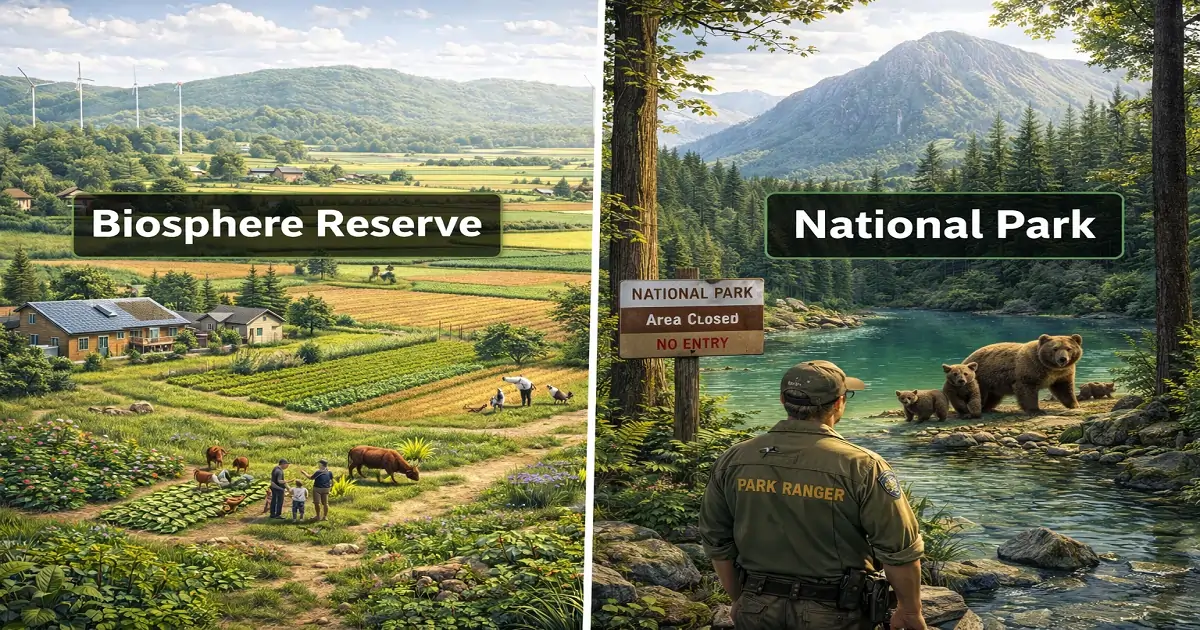
Biosphere reserves and national parks both protect nature, yet they follow different conservation approaches. A national park mainly focuses on strict protection of wildlife and landscapes. Human activities are usually limited to tourism and research under controlled rules.
In contrast, a biosphere reserve allows people to live and work within certain areas. It uses zonation to separate strict protection from sustainable use. Therefore, conservation and human life function side by side rather than apart.
The conservation philosophy also differs. National parks aim to preserve nature by reducing human presence. Biosphere reserves, however, promote cooperation between people and ecosystems. This model supports long-term protection while adapting to social and environmental needs.
Role of Biosphere Reserves in Global Wildlife Conservation
Biosphere reserves play an important role in global wildlife conservation by protecting ecosystems at a larger scale. They conserve forests, wetlands, and coastal areas that support countless species. As a result, wildlife gains stable habitats where natural processes can continue.
These reserves also connect conservation with learning and adaptation. Scientists study ecosystems, while communities apply sustainable practices. This shared effort strengthens conservation outcomes across different regions.
Within the broader framework of wildlife conservation, biosphere reserves act as practical models that complement other protected area systems. They support global efforts by showing how conservation can succeed when people and nature progress together.
Conclusion – Why Biosphere Reserves Matter for the Future
Biosphere reserves show how conservation can adapt to a changing world. They protect ecosystems while allowing responsible human involvement. This balance helps nature remain resilient under growing environmental pressure.
By combining protection, learning, and sustainable living, biosphere reserves support long-term ecological stability. They also guide future conservation planning by offering real solutions that work on the ground.
Looking ahead, biosphere reserves will remain vital for protecting biodiversity and shaping a sustainable relationship between people and nature. Their approach reminds us that conservation succeeds best when responsibility and coexistence guide our actions.